
15 Best UK Betting Sites – Licensed Online Bookies for 2026
Last Goalscorer Betting Explained: Pro Late-Game Playbook (2026)
Last Goalscorer betting is my favourite market because it lets you bet on the moment that often decides the game. The odds are also far juicier than Anytime Goalscorer. Unfortunately, I’ve suffered my fair share of heartache with this wager. Back in February, I thought Szoboszlai’s late goal against Manchester City was enough to get the job done, but I had to watch two more goals coming in and the player I backed getting red-carded! Thankfully, that’s all in the past. Come along for the ride as I expose my exact system for spotting late-game heroes and share expert tips for wagering!

10 minread10 minutes read
SportsBoom offers honest and impartial UK bookmaker reviews to help you make informed choices. While we may earn commissions through affiliate links, our content remains independent and free from promotional influence. For more information, see our Content Transparency and How We Review pages.

Last goal scorer betting
What is Last Goalscorer Betting?
Last Goalscorer is a bet where you predict who will score the final goal of the match. Unlike Anytime Goalscorer, where a player can score at any point to win your bet, here, only the last goal scorer matters.
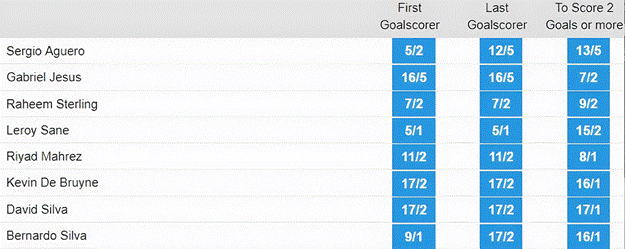
What is Last Goalscorer Betting
I’ve noticed Last Goalscorer odds are often completely mispriced because bookies overfocus on the obvious starters and top scorers, ignoring who’s likely to be on the pitch in the final 10-20 minutes.
I take advantage of these soft lines at UK-licensed operators through tracking substitutions, set-piece duties, and player stamina. Backing Viktor Gyökeres off the bench this season has been paying dividends!
Marcus Rashford was incredibly clutch when it comes to late-game winners. During the 2022/2023 season, Rashford scored 10 match-winning goals in the EPL, which equalled Rooney’s record at Man Utd. (Source: BBC)
How Last Goalscorer Betting Works
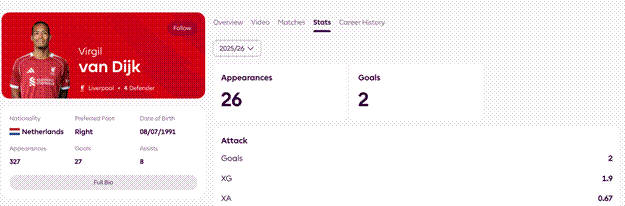
How Last Goalscorer Betting Works
For example, during Liverpool’s February match against Sunderland, punters got lucky when they backed Virgil van Dijk. Not only did the towering Dutch defender score the last goal, but he also netted the only goal of the match. In this scenario, anytime and last goalscorer bets were paid out.
Let’s look at another example. The match between Chelsea and Everton at Stamford Bridge on 13 December 2025 as an example. As you can see from the screenshot below, our tipster picked Cole Palmer to score anytime at 11/8. I decided to chase a bigger payout and backed the midfielder to score last.
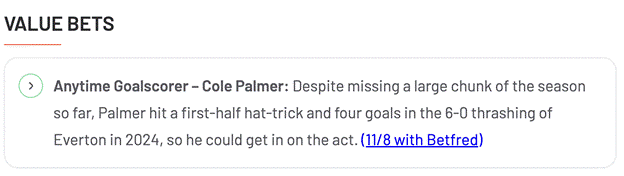
Value bets
The 23-year-old is incredibly clutch and is basically a lock every time he takes a penalty. I was expecting him to carve up the middle against Keane and Tarkowski.
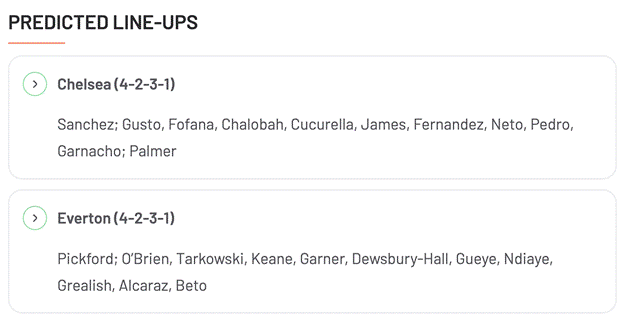
Predicted Line ups!
Even though Palmer played a blinder, unfortunately for me, he scored in the 21st minute after cutting into the box, beating Pickford at the near post. The game was over by half-time, and before long Palmer was subbed. I wish I followed SportsBoom’s exact pick!
How I Approach Last Goalscorer Bets?
I study the line-ups and map substitutions and determine which will be chasing late, which players are likely to be on the pitch late in the match and who will be involved in set pieces/penalties.
I focus on tied matches or games with one-goal margins that keep teams attacking, while a 2-0 lead often prompts the front team to sit back, making it very hard to score.
Once the match kicks off, I watch which team dominates the final third, which players are making late runs, and how fatigue is affecting defenders. A centre-back who constantly attacks corners suddenly becomes far more valuable than a striker whose team is stifling possession. I also note who the coach is likely to bring on.
Around the 70th minute, I combine all my signals. If the team chasing is still pressing, late-game gaps appear, and the right players are in position, I place the bet.
I care more about who is still attacking in the last 15-20 minutes than who looks best on paper before kick-off.
Why Last Goalscorer Betting Works
This market works because it pushes you to focus on timing, tactics, and match dynamics. A striker might top the scoring charts, like Erling Haaland, but if he’s substituted early, his odds may not reflect realistic chances of netting the final goal.
Bookmakers often misprice last goalscorer bets because conventional models rely heavily on expected goals (xG) and overall scoring rates, which don’t account for late‑game situations.
It’s About Game Flow, Not Star Players
I often avoid big names because their odds are too short to offer value. Instead, I target defenders who excel in the air for set-piece goals, especially in teams that earn lots of corners or free kicks. Fresh wingers coming off the bench are another favourite, as they can exploit tired full-backs, run at gaps, and often score late.
Last Goalscorer Pros and Cons
Pros
Higher odds than Anytime or First Goalscorer markets
Live odds can present value spikes when late changes occur
Stats like late touches in the box, fatigue exploitation, and set-piece involvement are highly predictive
Cons
High variance, as one goal decides it all
Requires tracking substitutions, match state, and late‑game patterns
I don’t even look at Last Goalscorer before the 70th minute. I watch who’s still taking corners and whether the underdog is throwing bodies forward.
The Three Drivers of Last Goalscorer Value
If you concentrate on these three core analytical drivers, your spidey senses will be tingling just before the last goal of the match:
- Role: Central attackers and penalty takers are more likely to be involved late in games. A number nine leading the line in the 80th minute typically gets more chances than a wide midfielder.
- Timing & Substitutions: A starter might dominate early but be subbed off before the final chance, whereas a late sub could exploit tired defenders.
- Match Flow & Game State: If a team is chasing the game late, they push numbers forward, creating space and chances for specific players.
Settlement Rules You Must Understand
Understanding the rules matters just as much as picking the right player. Don’t get caught by these rules:
- 90 minutes only - Regular time plus stoppage time counts. Extra time and penalties usually don’t.
- Stoppage time counts - Goals in added time are included.
- Must play - If your player doesn’t feature, the bet is normally void.
- Subbed off = live bet - If they’re taken off and don’t score last, the bet loses.
- 0-0 draw - All bets lose.
- Abandoned match - Usually void, depending on house rules.
- Official result rules - Settlement follows the governing body’s final decision.
I always check house rules before betting, confirm line-ups, and make sure it’s a 90-minute market.
Last Goalscorer vs Other Football Markets
The player who nets last is usually on the winning side, so one bet often links to match result, total goals, and anytime scorer markets.
Last Goalscorer vs Anytime Goalscorer
In anytime goalscorer bet, you pick a name and hope they score at any point. Last Goalscorer is about when that happens. I once backed Arsenal’s Gabriel Magalhães to score last against Newcastle. Arsenal kept sending crosses into the box, and I knew he would still be around for the late set-piece scraps. Last Goalscorer requires far more analysis than just hoping a star finds the net.
Last Goalscorer vs Over/Under Goals
Totals tell you about team scoring volume, not the timing or who. Over 2.5 is fine if both sides are open. But for a last goalscorer punt, you need to think about tiring wingers, and set-piece specialists stepping up.
Last Goalscorer vs Match Result
Match result = which team wins. Last goalscorer = which individual takes that final shot when the game is stretched, subs are on, and defenders are gassed. Manchester City may win a lot overall, but they’ve been getting pegged back late more than usual this season. You can’t ignore that kind of detail.
The Last Goalscorer Bettor Archetypes
These are types of players who thrive deep in the second half:
The Closer (Decisive Finishers)
- Description: Elite strikers who finish virtually every attacking sequence and take responsibility late in games.
- Example: Erling Haaland’s scoring consistency and central role make him a frequent choice for last goals in matches where City control flow.
- When I bet: If he starts and the team’s late dominance is expected.
- When I don’t: If the opponent shuts up shop early or Haaland is likely to be subbed before full‑time.
- Odds edge: Mispriced when public overvalues him in matches where late subs are more important than starters.
The Super‑Sub (Late Impact)
- Description: Players brought on late who specialise in exploiting fatigued defences.
- Example: A dynamic bench option like Dominic Solanke (when coming on late), who thrives on second‑half transitions.
- When I bet: Against teams that concede late and when the sub is likely to stay on for final 15+ minutes.
- When I don’t: If they’re starting, it’s not the right archetype for this market.
Odds edge: Often ignored by markets focused on starters.
The Opportunist Mid/Wide (Late Runners)
- Description: Midfielders or wingers with timing patterns that see them break into the box late, not necessarily the top scorer but with late goal instincts.
- Example: Jarrod Bowen is known for scoring decisive late goals by exploiting space after tiring defenders.
- When I bet: In matches with high late chances and open defences.
- When I don’t: In low‑tempo, defensive finishes.
- Odds edge: Mispriced when statistics under‑represent their late involvement.
My Last Goalscorer Betting Checklist
Before I place a Last Goalscorer bet, I always ask myself these same questions:
- Is the player likely on the pitch late (starter or impact sub)?
- Are they a central forward, set‑piece taker, or involved in late attacks?
- Does match flow favour late goals (teams chasing or pressing)?
- Has the player shown late‑game scoring patterns historically?
- Is the price genuine value or skewed by hype/public backing?
Common Mistakes in Last Goalscorer Betting
My first few last goalscorer punts showed me that even top scorers can fade into the background.
Star power isn’t enough - Watching Erling Haaland dominate the stats can be tempting, but I’ve seen games where City wrapped it up early, and the “big man” was off the pitch before the final whistle.
Bench players are gold if you know the patterns - Certain wingers and forwards regularly impact games in the last 15 minutes.
Match state dictates opportunity - Late goals rarely come from teams locked in defensive survival.
Live context beats stats alone - Markets overreact when a team is pressing hard late, inflating a player’s odds, only for a tactical shift to halt attacks entirely.
Tactical substitutes create hidden edges - Some strikers or attacking mids consistently arrive in the last 10-20 minutes and change the game.
Best Matches for Last Goalscorer Betting
You know the type of game: 78th minute, players blowing hard, managers pacing, one mistake away from heartbreak. That’s where I start paying serious attention!
- Tight scorelines (1-0, 1-1, 2-1) - Close games force teams to push late, creating space and desperation in the final 15 minutes.
- High late-goal frequency teams - Sides known for scoring after the 75th minute are gold.
- Strong benches - Impact subs who regularly score off the bench are perfect late-game weapons.
- Set-piece-heavy teams - Corners and free kicks spike late when teams chase results.
- Defensive fatigue signs - Teams with poor fitness records or heavy fixture schedules often concede late.
- Cup ties or must-win matches - When a draw isn’t enough, teams throw bodies forward in stoppage time.
- Clear penalty hierarchy - A designated penalty taker on the pitch in the 85th minute is always on my radar.
Conclusion
Congratulations, you’ve just levelled up your last goalscorer betting knowledge. Remember, before you have your next bet on football in the UK, assess your prospective player carefully and only back those who tick all the boxes on the checklist!
FAQs
Is Last Goalscorer betting high risk?
Last goalscorer betting is high risk because it depends on unpredictable timing, substitutions, and match flow, so even a strong pick can lose if another player scores later.
Can you bet on Last Goalscorer in-play?
Most bookmakers allow in-play last goalscorer betting, with odds adjusting dynamically based on the scoreline, remaining time and substitutions.
What happens if no goals are scored?
If no goals are scored, all last goalscorer bets are usually settled as losers.
What if my player scores but isn’t last?
If your selected player scores but another goal is scored afterward by any player, your bet loses.
Does stoppage time count?
Goals scored during first-half or second-half stoppage time count toward last goalscorer markets.

Bruce Douglas is an experienced editor and copywriting professional with a proven track record in shaping high-quality content across multiple platforms. With a career spanning journalism, editorial management, and digital content strategy, he brings a keen eye for detail and a passion for precision to every project he works on.
Related Content
- UK Tax Changes Force William Hill to Close 200 Betting Shops
- Gambler’s Fallacy in Football | Why “He’s Due a Goal” Is a Risky Bet
- Implied Probability in Betting: Converting Odds into Winning Chances
- Cash-Out Betting Explained: Why Bookmakers Offer Less Value
- Clean Sheet Betting Explained
- Draw No Bet Explained
- Why 12-Leg Acca Betting Is So Difficult
- What Is Total Corners Betting?
- How Twitter (X) and Discord Tipsters Are Changing UK Football Betting
- Betting Odds Explained
- Hybrid Bettors Explained: Psychology, Risk & Strategy Guide (2026)
- Double Betting Explained: The Expert Strategy Playbook 2026
- Transfer Specials Explained: Expert Betting Guide (2026)
- Trixie Bet Explained: How 3 Bets Work Together in 2026
- William Hill ‘glitch’ dispute follows £285,000 win and customer heart attack
- GambleAware Officially Closed to Make Way for Levy System
- House Edge vs Overround Explained
- RTP in Online Slots Explained
- Single Betting Explained: Odds, Probability & Value Guide
- Treble Betting Explained: How it Works
- UK Gambling Market Faces Risks After Major Tax Increase
- Multiple Betting Explained: How Accas Work & When to Use Them
- Illegal Casinos Target UK Players via “Not on GamStop” Searches – Investigation
- Student Gambling in the UK: £50 Weekly Losses Reported
- How Futures Betting Works 2026 Explained with Value Odds and Risk Factors