
Bridging
House Edge vs Overround Explained: How Bookmakers Make Their Margin
You might think that betting on sports is pretty simple. The odds reflect the likelihood of the outcome, and all of the odds together have to add up to a 100% probability, right? Not quite. All bookmakers build in a margin, called the “overround,” which means that they’ll profit over time. Understanding how overround works can be beneficial to you as a punter because it helps you decide which bookmakers offer the best value.

SportsBoom offers honest and impartial UK bookmaker reviews to help you make informed choices. While we may earn commissions through affiliate links, our content remains independent and free from promotional influence. For more information, see our Content Transparency and How We Review pages.
House Edge vs Overround Explained
House Edge: The Bookmaker’s Advantage
It’s likely that you’ve come across the term “house edge” before. It’s defined as the profit that the online casino or bookmaker keeps after wins are paid out. House edge is similar to slot game RTP in that it’s calculated over a long period of time.
A bookmaker might have a theoretical RTP of 95% (house edge of 5%), which would mean that over time, for every £100 wagered, £95 should return to players. But this isn’t true for individual markets or shorter time periods.
The theoretical advantage isn’t fixed. It can vary between different sports, markets, locations, and player betting patterns, plus house edge in sports betting isn’t quite as simple as in slots, because there are no Random Number Generators. This means that the mathematical fairness isn’t quite as straightforward, and the edge can pretty easily be wiped out by unexpected outcomes, like an underdog winning a horse race or football match.
How the Edge is Applied
While the bookmaker defines the theoretical advantage in the form of house edge, overround is the way the house edge is actually applied in real markets. A bookmaker builds an edge into the odds on a particular market, which means that overall, they’ll make a profit. This is also known as margin.
Essentially, if you add up the percentage chances of all possible outcomes on a market, it’s likely to come to more than 100%. This figure is known as the overround for the market, and anything in excess of 100% is the bookmaker’s margin. You might also hear it referred to colloquially as “juice” or “vigorish”, but all of these words mean the same thing.
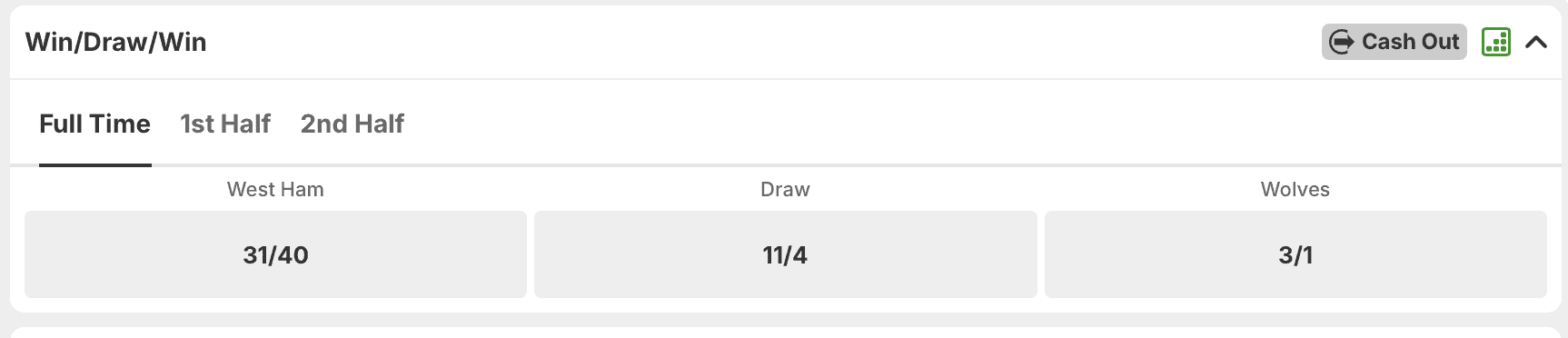
As an example, let’s look at Betway’s odds for the clash between West Ham and Wolves on the 10th of April 2026.
How the Edge is Applied
If we work out the implied percentages here, we get:
- West Ham (31/40): 56.34%
- Draw (11/4): 26.67%
- Wolves (3/1): 25.00%
That all adds up to 108.01%, which is the overround for the market. Granted an even distribution of bets placed at these odds, the bookmaker can expect an 8.01% profit, regardless of the result.
The UK Gambling Commission doesn’t set a cap on the overround at online bookmakers, and unlike with slot game RTP, the figures aren’t published anyway on the gambling site, so it’s advantageous to know how to do the calculations yourself.
How Overround Varies
The overround varies for each different bookmaker and the odds that they’re offering. Understanding the overround can help you pick the best possible odds, which could have positive outcomes for you as a punter.
The fewer possible outcomes, the tighter the overround tends to be, as each selection generally will have some margin baked into its price. The more selections, the more margin.
How Overround Varies
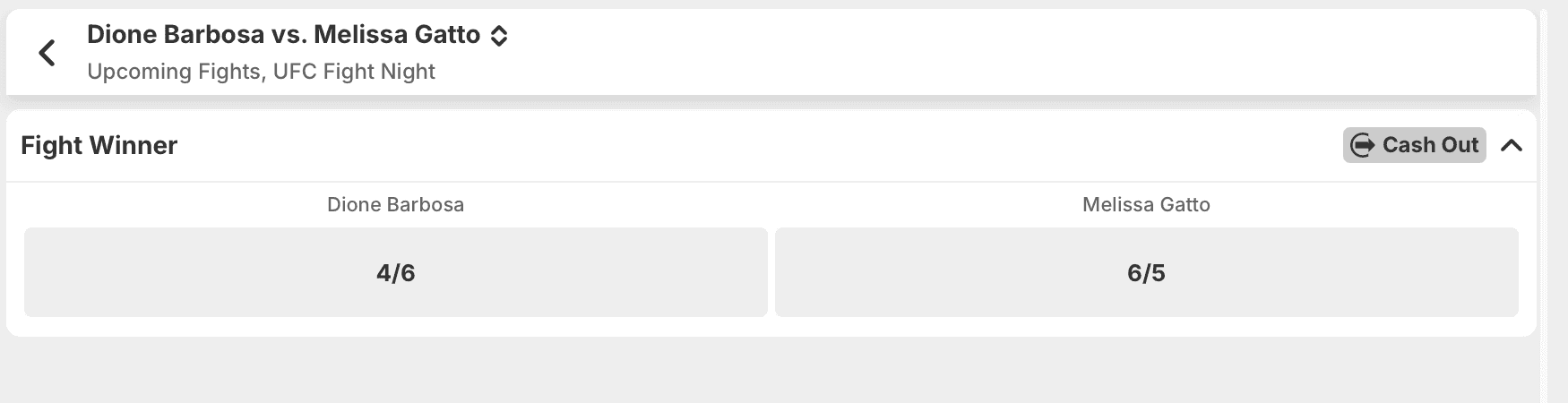
For example, in this tennis match (with only two potential outcomes), Betway’s overround translates to about 105.45%, which is lower than the football example we looked at earlier, where there are three possible outcomes.
In general, the more outcomes, the higher the overround. For example, if you’re betting on the Grand National or a novelty market like who’ll win BBC Sports Personality of the year, you could be looking at an overround of up to 140% or even higher.
Once you understand overround, you can look around at different bookmakers to see where they’re lowest and identify the best possible margin efficiency.
Calculating the Overround on UK Odds
In the UK odds format, you’ll need to do a bit of maths to calculate the overround. You can use this formula for your calculations:
Implied percentage = denominator ÷ (numerator + denominator) x 100
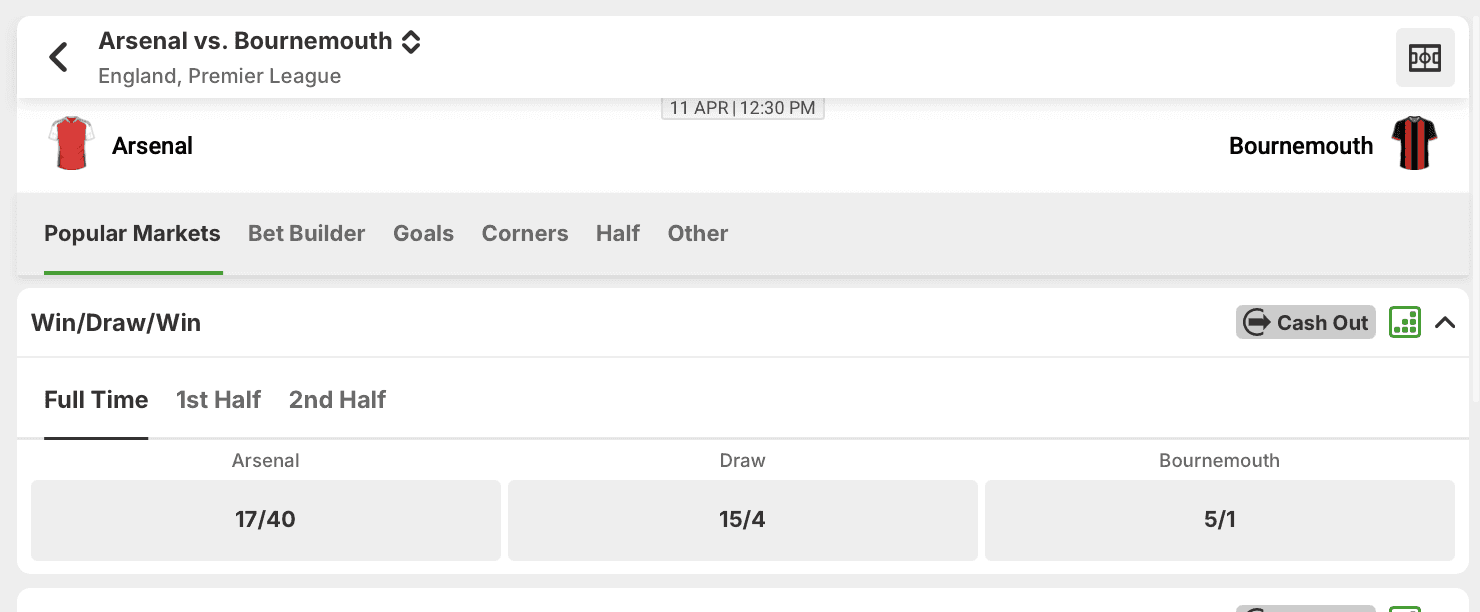
Let’s use another football example, in this case Betway’s odds for an upcoming Premier League match between Arsenal and Bournemouth.
Calculating the Overround on UK Odds
The first step is to turn each fractional odd into a percentage. You can do that by dividing the number at the bottom by the total of the two numbers and multiplying by 100.
● Arsenal 17/40: 40 ÷ (17 + 40) = 0.701 x 100 = 70%
● Draw 15/4: 4 ÷ (15 + 4) = 0.21 x 100 = 21%
● Bournemouth 5/1 → 1 ÷ (5 + 1) = 0.17 x 100 = 17%
Add the percentages together: 70 + 21 + 17 = 108%
This means that the overround for this market is 108%.
Conclusion
Both the house edge and the overround make one thing clear: the bookmaker should expect to profit regardless of the outcome of a market or event, unless one particular selection saw a much higher rate of bets on it. That doesn’t mean individual bettors can’t win, though. It’s up to you to assess the odds at each different site, to try to find the ones that offer the lowest overround and therefore the best value for you as a punter. As always, gambling responsibly is key, so make sure you set limits for yourself and never wager more than you can afford to lose.

Farah Barry is an experienced SEO content writer and content strategist with a strong background in digital marketing and the iGaming industry. With over a decade of experience across content, CRM, and brand management, she brings a well-rounded and commercially focused approach to everything she creates.
Comments
0 comments
No comments yet. Be the first to share your thoughts!
Related Resources to Bridging
- How Goliath Bets Work in Sports Betting
- Combination Bets Explained
- Cash Out or Let It Ride? How to Make the Right Call on Your Acca
- How Futures Betting Works 2026 Explained with Value Odds and Risk Factors
- Double Betting Explained: The Expert Strategy Playbook 2026
- Card Betting Explained: Strategy, Odds & How to Find Value
- Treble Betting Explained: How it Works
- Single Betting Explained: Odds, Probability & Value Guide
- System Betting Explained
- European Handicap Betting Explained
- Spread Betting Explained: Expert Playbook & Strategy Guide 2026