
Betting News
BGC Takes Betting Shop Tax Fight to the High Street with New Campaign
The Betting and Gaming Council's new campaign swaps spreadsheets for shop staff, as the industry braces for a possible doubling of the tax on gaming machines

SportsBoom offers honest and impartial UK bookmaker reviews to help you make informed choices. While we may earn commissions through affiliate links, our content remains independent and free from promotional influence. For more information, see our Content Transparency and How We Review pages.
Credit: Getty Images
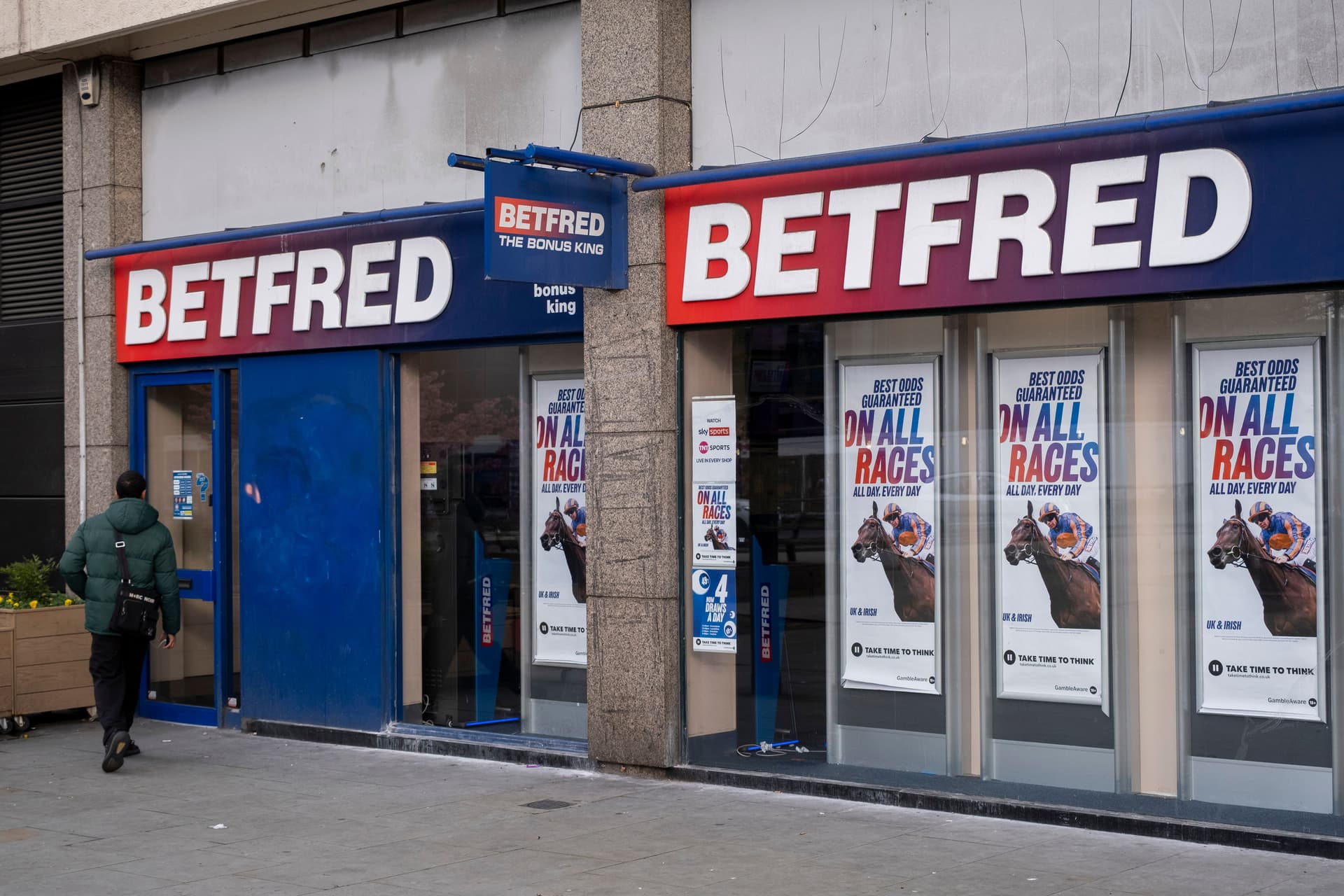
The Betting and Gaming Council (BGC) has launched Back Our Betting Shops, a campaign designed to put the people, jobs and communities behind Britain's high street bookmakers at the centre of the tax debate.
Rather than leading with operator balance sheets, the campaign will feature long-serving employees, apprentices, managers, customers, and community partners, while making the case that betting shops still function as community hubs on high streets across Britain. It will also warn of the human consequences further tax increases could have for workers, families, local businesses and communities.
The timing is no accident. The Autumn Budget is due to be announced on Wednesday, 28 October, and Chancellor John Healey is reportedly considering targeting the industry.
What is at stake?
At the heart of the campaign is EY modelling commissioned for the sector.
It suggests that increasing Machine Games Duty (MGD) to 40 per cent could put up to 16,000 jobs, nearly 1,500 betting shops and as many as 34 casinos at risk, while leaving the Treasury £124 million worse off.
The BGC's message is that behind every one of those numbers is a person whose job, income and future could be affected.
The warning lands after years of contraction. Since 2019, more than 3,000 betting shops have closed, costing over 16,000 jobs. Over the same period, 22 casinos have shut their doors with the loss of more than 3,000 jobs, while 108 bingo clubs have closed with more than 2,000 jobs lost.
The closures have not stopped. Evoke and Betfred earlier this year announced plans to shut 230 and 132 shops respectively, while Flutter recently said it's looking to close up to 100 Paddy Power shops across the UK and Ireland.
Despite those pressures, betting shops still support more than 36,000 jobs across Britain. The wider regulated betting and gaming sector supports 109,000 jobs, contributes £6.8 billion in gross value added and generates more than £4 billion a year in tax revenue for the Exchequer.
More than a shopfront
The BGC is leaning heavily on the high street argument: shops as places where people work, meet and socialise, bringing customers into town centres and driving footfall to neighbouring businesses.
It is also making the sporting case. Betting shops support horseracing through the statutory Horserace Betting Levy, alongside wider sponsorship and investment in professional and grassroots sport, including rugby league clubs and competitions rooted in communities across Britain. Racing has particular reason to worry: analysts have told the Racing Post that the proposal could result in almost 3,000 betting shop closures while reducing horse racing levy receipts by around £70m.
The campaign will gather stories from shops across Britain, giving a voice to staff, customers and the communities that value them.
BGC CEO Grainne Hurst said: “Behind every betting shop is a team of real people earning a living, supporting their families and playing a part in their local community.”
“These shops are not just businesses. For many people they are community hubs, familiar places on the high street where people work, meet and socialise, often with staff who have known their customers for years.”
“They also help support British sport, from horseracing to rugby league, including clubs and competitions that are themselves at the heart of communities across the country.”
“We have already seen thousands of shops close, and thousands of jobs disappear. Further tax increases would not just show up on a balance sheet. They could mean more people losing their livelihoods, more empty shopfronts and more communities losing businesses they value.”

“That is why we are asking Britain to Back Our Betting Shops. This campaign is about telling the stories behind the statistics and making sure the voices of the people whose jobs and communities are at stake are heard.”
BGC CEO Grainne Hurst
Two models, one machine
The most striking thing about this fight is that both sides claim the numbers are on their side, and they cannot both be right.
The pressure for a rise traces back to the Social Market Foundation.
The think tank released a report suggesting that doubling machine games duty from 20% to 40% could increase the tax take from Category B £2-a-spin slot machines alone by between £275m and £458m. EY's modelling for the industry reaches the opposite conclusion: a £124 million shortfall for the Treasury.
The gap comes down to one question: how many shops survive? The SMF figure broadly assumes the estate keeps trading and pays the higher rate. The EY figure assumes closures on a scale that wipes out the gains, taking corporation tax, business rates, employer National Insurance and levy income with them. In effect, the Treasury is being asked to choose between a static model and a behavioural one.
That is why the machines matter so much. Betting shops generate around 50% of their revenue from category B machines, which makes MGD far more than a peripheral levy. It is a tax on the engine room of the modern bookmaker. Operators are already putting figures on it: Entain CEO Stella David said adopting the SMF proposal would add around £100 million a year to Entain's UK retail costs.
There is also a recent precedent. Industry commentators have drawn a direct line to the 2019 Fixed Odds Betting Terminal stake cuts as a precedent for how damaging structural shocks can be to retail betting. The BGC's own closure figures start from that same year, and it is hard to separate the post-2019 decline from the loss of the £100 maximum stake.
Yet that precedent cut both ways. The FOBT reforms were driven by harm concerns, and many of the campaigners who pushed for them regard machine revenue as the part of the shop business most closely associated with problem gambling. For them, a higher MGD rate is a public health measure as much as a revenue one, and fewer machines on the high street is a feature rather than a bug.
The political mood music is not helping the industry either.
Former Prime Minister Gordon Brown called for a rise in Machine Games Duty at the end of August, while PM Andy Burnham compared betting shops to "rogue" outlets operating on UK high streets.
That is the real test for Back Our Betting Shops. By putting cashiers and managers in front of the cameras, the BGC is trying to reframe the debate away from machines and towards jobs on the high street. Whether a government under fiscal pressure buys that framing, or sides with the SMF's arithmetic, will be clear on 28 October.

Louis Hobbs is the Sports Editor at SportsBoom, overseeing daily coverage across a wide range of sports while shaping the site’s editorial direction and breaking news agenda.
When he’s not editing the website from home or SportsBoom’s London office, Louis can usually be found in the darts or snooker press room. He has covered both sports extensively for SportsBoom, reporting live from venues for over three years and building strong relationships across the professional circuits.
With a background in interviews, exclusives and live event reporting, Louis combines on-the-ground insight with sharp editorial judgement to ensure SportsBoom delivers authoritative, engaging and timely sports journalism.
Comments
0 comments
No comments yet. Be the first to share your thoughts!
Related Resources to Betting News
- Manchester City Have Five Wins From Five, But History Is Not On Their Side
- Can AI Keep bet365 on the Right Side of the UK's Marketing Crackdown?
- Betfred Ends Super League Sponsorship As UK Gambling Tax Bite Deepens
- Why Is Payment Infrastructure Becoming iGaming's Next Competitive Battleground?
- What Does BOYLE Sports' Nottingham Forest Deal Show About Life After The Shirt Ban
- Has the Premier League's Gambling Ban Made Betting Money Disappear or Just Harder to See
- Who is the UK's New Gambling Minister and What Should Operators Expect
- Is Andy Burnham's Betting Shop Crackdown Based on a False Narrative? What the Closure Numbers Actually Show
- LeoVegas Swapped BetMGM UK's Sportsbook Engine: What Actually Changes for Punters?
- Gambling Minister Merry-Go-Round: Why UK Horseracing Could Pay the Price
- The Saturday 3pm Table: What Happens When You Strip the Premier League Back to Its Original Slot
- Supercomputer Predicts: England's 2030 World Cup Squad
- Did Chelsea Make a Mistake Selling Andrey Santos? Data Analyses His £50m Move to Manchester United
- The Curse of the Quarter-Final: Why History Says England Can't Win in Miami
- Is Lewis Hamilton About to Fix Ferrari’s Silverstone Curse?
- Does Wimbledon's £64.2m Record Prize Pot Actually Change Who Wins?
- Can Bingo-Casino Brands Win Back UK Players?
- Survey Finds Three in Four UK Adults Struggle to Spot Illegal Betting Ads
- Are Casino Sister Sites Confusing UK Players?
- Are Low-Stakes Slots Safer for New Bettors?