
Betting News
Did Chelsea Make a Mistake Selling Andrey Santos? Data Analyses His £50m Move to Manchester United
A data-led look at the £50m move. What Chelsea is giving up, whether Santos can fill the Casemiro and Ugarte voids, and whether he actually fits alongside Bruno Fernandes and Kobbie Mainoo in Michael Carrick's midfield three.

SportsBoom offers honest and impartial UK bookmaker reviews to help you make informed choices. While we may earn commissions through affiliate links, our content remains independent and free from promotional influence. For more information, see our Content Transparency and How We Review pages.
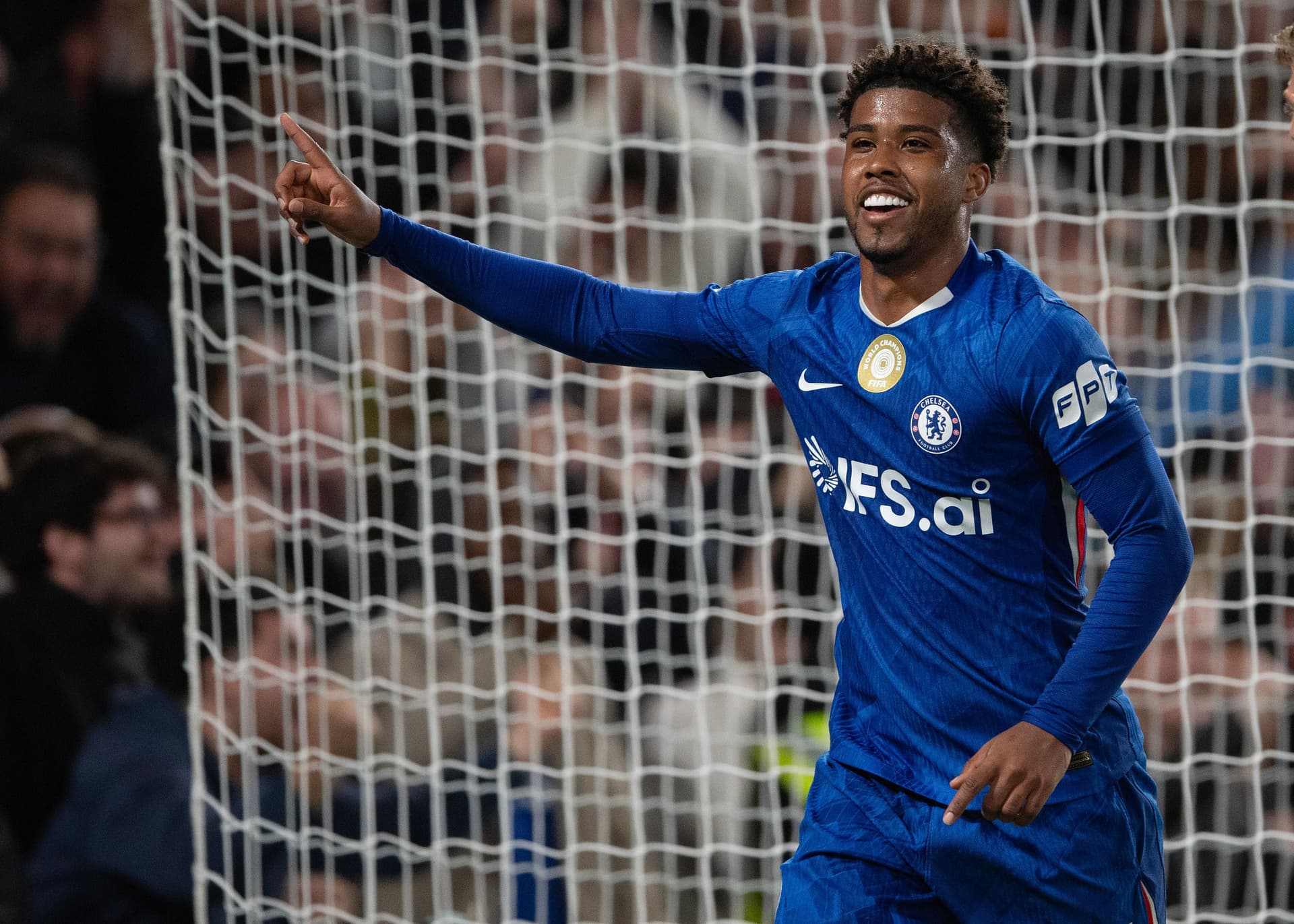
Credit: Getty images
Manchester United's midfield has undergone major change this summer.
Casemiro departed Old Trafford as a free agent after four years, while Manuel Ugarte, signed just two years ago as his long-term successor, failed to convince Ruben Amorim or Michael Carrick and has attracted serious interest from Juventus, Everton and Crystal Palace.
Into that void arrives Andrey Santos, the 22-year-old Chelsea midfielder, for a reported £50m[1].
The move raises two questions: how much are Chelsea giving up, and is Santos actually the right fit for United's evolving midfield?

What Chelsea Are Losing
Santos made 27 Premier League appearances (13 starts, 14 substitute appearances) during the 2025/26 campaign, playing 1,255 minutes, the equivalent of just under 14 full league matches[2].
Across all competitions (Premier League, Champions League, FA Cup, Carabao Cup and Club World Cup), he featured 47 times[3][4].
On the surface, those numbers paint the picture of a dependable squad player rather than an automatic starter.
The team results, however, are more eye-catching.
Chelsea won 55.3% of matches across all competitions when Santos featured, compared to just 36.8% when he wasn't included in the squad[5][6].
More notably, that trend survived one of the most chaotic managerial seasons in recent Premier League history.
Santos played under Enzo Maresca (before his move to Manchester City), Liam Rosenior during his brief 107-day spell, and interim coach Calum McFarlane across two caretaker periods.
Of course, raw win percentage doesn't account for opposition quality or squad rotation, so it isn't proof that Santos directly caused Chelsea to win more matches.
However, an 18 percentage-point swing across 66 fixtures and three different managerial regimes is difficult to dismiss outright. At the very least, it raises legitimate questions over whether Chelsea gave him enough opportunities.
His season also ended on a high.
In Chelsea's penultimate league game, Santos played the full 90 minutes, scoring his only Premier League goal in a 2-1 victory away at Tottenham. Rather than fading into the background, he finished the campaign looking like a player building momentum, making the decision to sell him only weeks later appear more surprising.
Did Chelsea Sell Too Soon?
Financially, the deal makes obvious sense.
Santos was Chelsea's fourth or fifth-choice central midfielder behind Moisés Caicedo and Enzo Fernández, played fewer than 40% of available league minutes and is expected to generate close to pure profit after arriving from Vasco da Gama for around £16m in 2023.
Strategically, though, the picture is less convincing.
Not only do the underlying numbers suggest a player trending upwards, but Chelsea have also sold him directly to a rival competing for the same European places and transfer targets.
United's return to the Champions League only strengthens the logic from Santos' perspective.
If Chelsea are rebuilding to compete with Manchester United, Arsenal and Manchester City, strengthening one of those rivals with a talented 22-year-old carries obvious long-term risk regardless of the accounting benefit.
The timing also feels significant, with the sale completed before Xabi Alonso had the opportunity to fully assess Santos within his own plans.

Can Santos Replace Casemiro?
This is where the analysis becomes more interesting.
Santos is effectively arriving to occupy the space Casemiro has vacated, but they aren't identical players.
Casemiro remains the greater aerial threat, with seven of his nine goals coming via headers, while his defensive volume, tackles, interceptions and overall defensive contributions comfortably exceed Santos' output.
Santos, however, offers cleaner possession.
He completed 90.1% of his passes compared to Casemiro's 81.3%, while also winning a higher percentage of his duels (62.0% compared to 52.7%)[7].
Structurally, both players operate as disciplined defensive midfielders shielding the back four rather than driving forward with the ball. Santos' 0.14 successful dribbles per 90 is the lowest figure among every midfielder analysed.
A Brazilian scout previously described Santos as "a mix between Bruno Guimarães and Casemiro", although statistically his game resembles Casemiro far more than Guimarães[8].
The verdict is fairly straightforward.
Santos is a sensible positional replacement, but in the short term represents a downgrade defensively and physically. The upside is obvious, he's 22, while Casemiro is 34.
Does Santos fit the Ugarte profile?
Potentially not.
With Juventus, Everton and Crystal Palace all monitoring Ugarte, alongside the serious knee injury suffered at the World Cup, United may need Santos to cover aspects of Ugarte's role too.
Here, the profiles diverge more sharply.
Ugarte is comfortably the most defensive midfielder in this comparison, producing 15.47 defensive contributions per 90, more than 60% higher than Santos[9].
He is a specialist destroyer.
Santos is calmer in possession and a superior passer, but significantly less aggressive as a ball-winner.
If United expect him to replicate Ugarte's defensive workload, the numbers suggest he isn't that player.
Instead, Santos sits somewhere between the two.
The reporting around the transfer described him as offering "more defensive solidity than Mainoo" and "better ball progression than Ugarte", which aligns closely with the underlying data.
How Does He Fit Alongside Mainoo and Bruno?
Carrick's likely midfield trio of Santos, Kobbie Mainoo and Bruno Fernandes appears complementary on paper.
Each player performs a clearly different role.
Bruno remains the attacking hub, leading comfortably for goals, assists (0.62 per 90), expected goals and chances created (3.99 per 90). His modest defensive numbers and 45.6% duel success illustrate that defensive responsibility isn't his primary role[10].
Mainoo acts as the connector.
His 1.03 successful dribbles per 90 is more than seven times Santos' figure, while he also contributes the second-highest creative output and posts the strongest defensive contribution rate of the trio (10.12 per 90)[11].
Santos provides the platform.
He records the highest passing accuracy (90.1%), highest tackle rate (2.65 per 90), highest duel success (62.0% compared to Mainoo's 49.5% and Bruno's 45.6%) and the lowest attacking output.
In theory, it's a balanced division of labour. Santos protects possession, Mainoo carries the ball, and Bruno creates chances.
The concern is physical rather than tactical.
Neither Santos nor Mainoo offers Casemiro's aerial dominance or Ugarte's ball-winning intensity. Against quicker, more direct opponents, that combination could be vulnerable in transition.
Creatively, the trio also relies heavily on Bruno.
Having played every league minute last season, any absence would leave Santos and Mainoo contributing just 0.07 and 0.05 goals per 90, alongside 0.00 and 0.11 assists per 90, respectively.
Final Verdict
For Chelsea, the financial logic is undeniable, but the wider footballing picture is far less straightforward.
Selling a talented 22-year-old whose underlying numbers pointed upwards, and doing so to a direct rival competing for the same European places, carries genuine strategic risk. If the £50m is reinvested effectively and Xabi Alonso builds a stronger midfield, the decision may ultimately be justified, but that remains to be seen.
For Manchester United, this looks like a calculated investment rather than an outright bargain.
Santos is neither a direct Casemiro replacement nor a direct Ugarte replacement. Instead, he combines elements of both, favouring secure possession and positional discipline over elite defensive output.
Alongside Mainoo and Bruno Fernandes, the profiles complement each other well, but the shared mobility limitations of Santos and Mainoo mean Carrick will likely need an additional specialist ball-winner to maximise the midfield's potential.
If that balance is found, Santos has every chance of proving to be far more than simply another Chelsea academy sale.

Louis Hobbs is the Sports Editor at SportsBoom, overseeing daily coverage across a wide range of sports while shaping the site’s editorial direction and breaking news agenda.
When he’s not editing the website from home or SportsBoom’s London office, Louis can usually be found in the darts or snooker press room. He has covered both sports extensively for SportsBoom, reporting live from venues for over three years and building strong relationships across the professional circuits.
With a background in interviews, exclusives and live event reporting, Louis combines on-the-ground insight with sharp editorial judgement to ensure SportsBoom delivers authoritative, engaging and timely sports journalism.
Comments
0 comments
No comments yet. Be the first to share your thoughts!
References
- 1.SI.com - "What Man Utd's Andrey Santos 'Agreement' Means for Ongoing Midfield Rebuild
- 2.FotMob - Andrey Santos player profile, 2025/26 Premier League season stats
- 3.Sofascore - Andrey Santos player profile, appearances by competition
- 4.Worldfootball.net - Andrey Santos, career matches by club competition
- 5.WhoScored.com - Andrey Santos, match history across cup competitions
- 6.Wikipedia - 2025–26 Chelsea F.C. season
- 7.FotMob - Casemiro player profile, 2025/26 Premier League season stats.
- 8.UnitedInFocus - Who is Andrey Santos? Man Utd agree deal to sign midfielder likened to Bruno Guimaraes
- 9.FotMob - Manuel Ugarte player profile, 2025/26 Premier League season stats
- 10.FotMob - Bruno Fernandes player profile, 2025/26 Premier League season stats
- 11.FotMob - Kobbie Mainoo player profile, 2025/26 Premier League season stats
Related Resources to Betting News
- The Curse of the Quarter-Final: Why History Says England Can't Win in Miami
- Is Lewis Hamilton About to Fix Ferrari’s Silverstone Curse?
- Does Wimbledon's £64.2m Record Prize Pot Actually Change Who Wins?
- Can Bingo-Casino Brands Win Back UK Players?
- Cluster-Pay Slots vs Payline Slots: Which is Easier?
- Survey Finds Three in Four UK Adults Struggle to Spot Illegal Betting Ads
- Are Casino Sister Sites Confusing UK Players?
- Are Low-Stakes Slots Safer for New Bettors?
- 30+ Unregulated Gambling Sites Targeting Young UK Men, Entain Finds
- Open Banking and Safer Casino Deposits
- Are Instant Win Games Rigged?
- Are No-Wagering Bonuses Becoming the New Trust Signal?
- Gambling Minister Signals Support for Growth of Regulated Betting Industry
- Polymarket Row Highlights BGC's Big Tech Concerns
- Why RTP Can Mislead Slot Players
- Cascading Reels vs Traditional Slots
- Why the UK Gambling Commission Won't Reveal Its £26m Plans
- UK Casino Stake Limits and Market Growth
- Live Dealer vs RNG Games
- Flutter to Delist From London Stock Exchange as US Focus Deepens