
Betting News
Why Is Payment Infrastructure Becoming iGaming's Next Competitive Battleground?
Payment infrastructure is becoming iGaming's next competitive battleground, with instant payouts, local rails and cross-border settlement key to global growth.

SportsBoom offers honest and impartial UK bookmaker reviews to help you make informed choices. While we may earn commissions through affiliate links, our content remains independent and free from promotional influence. For more information, see our Content Transparency and How We Review pages.
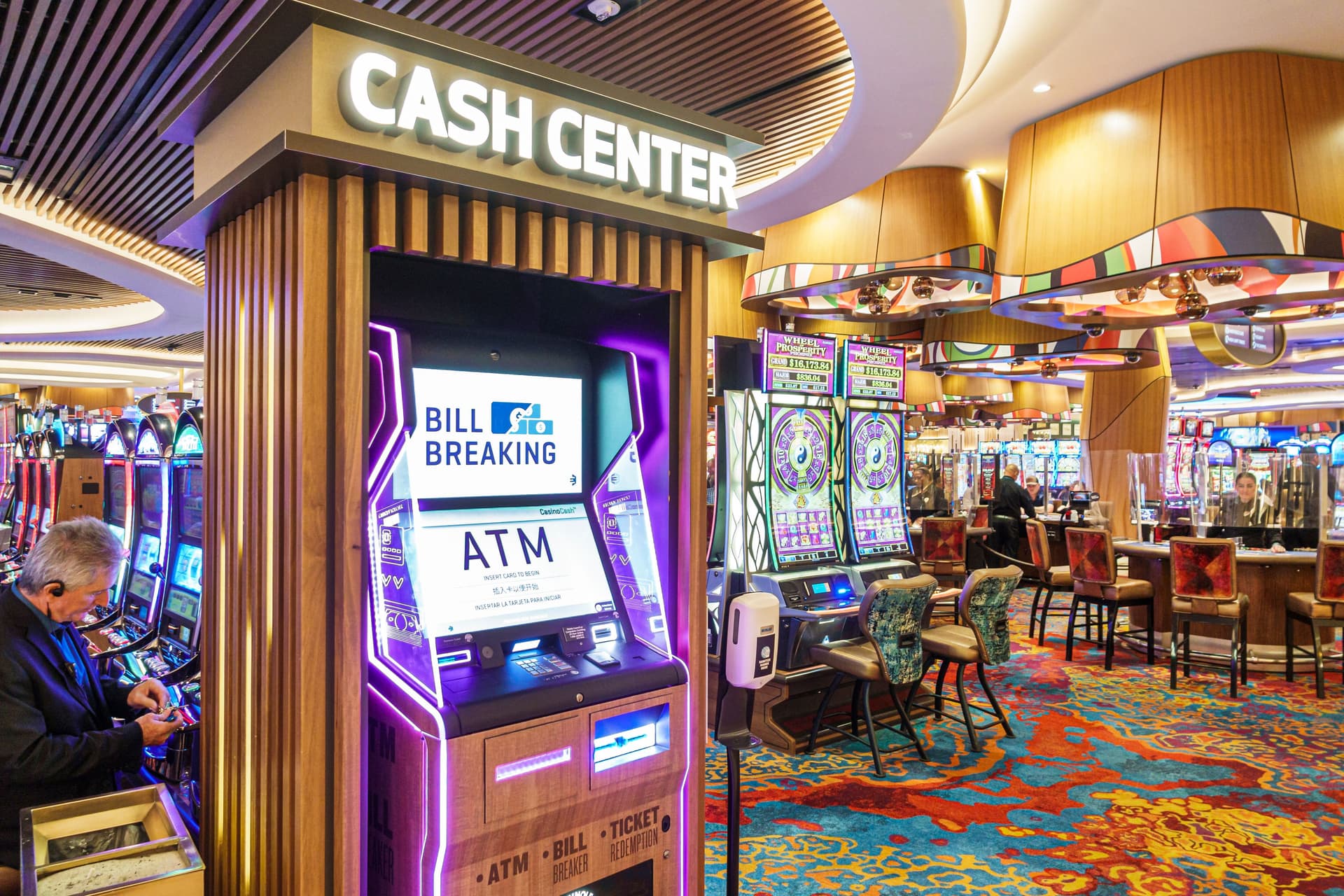
Credit: Getty Images
Product innovation, player acquisition and regulation tend to dominate the conversation around global iGaming growth.
But according to Bryan McMorrine, Director of Partnerships & Client Solutions at real-time settlement network RTGS.global, the sharper edge of competition now sits somewhere less glamorous: payments.
With the sector on course to top $180 billion, operators running across multiple jurisdictions and currencies are being pushed to deliver instant deposits, real-time withdrawals and frictionless cross-border experiences, or risk losing players to a competitor who can.
SportsBoom sat down with McMorrine to unpack why payments have quietly become the infrastructure layer that makes or breaks an international launch.
Why payment friction is now a direct player retention issue
Games are instant. Players increasingly expect their money to move the same way, and McMorrine is unambiguous about what happens when it doesn't.
"It's too easy for players to leave a platform and switch to a competitor if they feel that local deposits and payouts are not been managed in a timely manner. Games are instant so players expect their payouts to be the same. RTGS.global moves money as fast as the game itself,” McMorrine told SportsBoom.co.uk in an exclusive interview.
Asked directly whether getting payments right, or wrong, has visibly made or broken an operator's launch in a given market, McMorrine's answer was a flat "100%”.
In a sector where switching costs for players are close to zero, the payment rail sitting behind the platform has become as much a retention tool as the odds, the game library or the loyalty programme.
The push towards instant settlement and local currency infrastructure
The gap McMorrine is describing is stark in raw numbers.
Traditional correspondent banking, moving through SWIFT, typically takes between one and five business days to settle. RTGS.global's model compresses that to seconds.
"SWIFT traditionally takes 1 to 5 business days. RTGS.global enables near-instant settlement in seconds, 24/7, 365 days per year."
Part of the delay in conventional cross-border payments comes from currency pairs that don't trade directly. Many "exotic" corridors route through the US dollar as an intermediate step, effectively doubling the settlement chain.
"Some exotic corridors do not traditionally trade as direct currency pairs but instead trade via USD, adding another settlement layer and doubling settlement times."
McMorrine points to a Turkey-to-Tajikistan transaction as an illustration of what direct currency-pair trading can do to that timeline, from a typical two weeks via correspondent banking down to seconds.
"RTGS.global eliminates this by allowing trading directly across any live currency pair, for example, completed settlement transaction from Turkey to Tajikistan in seconds rather than typical two weeks via correspondent banking."
There's also a market-access angle. New territory expansion for an operator has traditionally been a multi-year undertaking, McMorrine claims that timeline can now be measured in days.
"Increasing into new markets can take years to establish but with RTGS.global, iGaming operators can add on new markets in as little as 72 hours via our UI connection or two weeks via API."
Brazil, LatAm and Canada are reshaping global growth strategy
Emerging markets are where the payments conversation gets most concrete. Brazil's Pix system, in particular, has reset player expectations for what "instant" means.
"Brazil's Pix has set the bar at instant, any-time deposits and payouts, and players don't distinguish the gaming experience from the payment experience. Operators are seeing growth in international client base so need access to international local payment rails that can quickly deposit and payout in these countries."
That's pushing operators to think beyond simple pass-through payments and towards genuine local treasury infrastructure.
"RTGS.global also offers local names accounts in the iGaming company name to also hold local balances, supporting treasury management."
McMorrine is careful not to overstate hard adoption figures for real-time rails in iGaming specifically, framing the trend instead as directional growth tied to the sector's trajectory toward $180 billion by 2030.
"We don't have hard adoption percentages, so framing this as growth rather than a stat: the market is racing towards U$180bn by 2030, and demand for real-time rails is accelerating fastest, in Brazil's Pix adoption and regulatory reforms are a big driver of regional LatAm growth. We are seeing increased demand from Canadian MSBs looking for direct instant payments from Canada to the UK."
Canada, meanwhile, is charting its own course rather than converging with UK or US norms. McMorrine puts that down to regulatory preference as much as anything else.
"To date, they seem to be forming their own model as many PSPs in the iGaming space still seem to have a preference for a Canadian license due to perceived ease of dealing with local regulatory requirements versus the more established FCA rules."
The operational reality of fragmented cross-border payment systems
For an operator running UK, LatAm and Canadian operations side by side, McMorrine is blunt about what the underlying payments stack actually looks like today: not unified, but fragmented by region, with FX flows still leaning heavily on the US dollar as a hub currency rather than trading directly between regions.
"Very fragmented by region. For example, to date, LatAm has traditionally primarily traded FX via USD rather than direct to other local regions such as the EU."
Even markets with well-established trade relationships aren't immune. Mexico and the EU, for instance, still struggle to move funds directly and instantly between each other.

"Markets such as Mexico and EU have strong trading links but many still find it tough to move instantly funds directly between the region. Long correspondent banking chains from UK, LatAm or Canada to other regions often create friction, increasing costs and reducing transaction visibility."
Stablecoins, compliance and where the industry goes next
Beyond the specifics McMorrine addressed directly, two themes sit in the background of this conversation and are worth flagging for operators watching the space.
Stablecoins are increasingly discussed across the wider payments industry as a possible settlement layer that could sidestep some of the correspondent banking friction described above, though that remains a live and evolving debate rather than a settled part of RTGS.global's current offering.
Similarly, as regulators in markets like the UK, Canada and across LatAm tighten oversight of payment flows, the operators best placed to expand internationally look increasingly to be the ones treating compliant, regulated settlement infrastructure as a growth enabler rather than a box-ticking exercise, a dynamic reflected in RTGS.global's own model of working only with regulated network participants.
"RTGS.global's network only supports regulated participants and can plug into whichever model prevails without operators rebuilding local banking relationships."
McMorrine's closing point sums up the pitch: for operators trying to compete on international deposits and payouts, the underlying rail is no longer a back-office concern.
"RTGS.global offer a simple solution that eliminates these issues,” he concluded.

Louis Hobbs is the Sports Editor at SportsBoom, overseeing daily coverage across a wide range of sports while shaping the site’s editorial direction and breaking news agenda.
When he’s not editing the website from home or SportsBoom’s London office, Louis can usually be found in the darts or snooker press room. He has covered both sports extensively for SportsBoom, reporting live from venues for over three years and building strong relationships across the professional circuits.
With a background in interviews, exclusives and live event reporting, Louis combines on-the-ground insight with sharp editorial judgement to ensure SportsBoom delivers authoritative, engaging and timely sports journalism.
Comments
0 comments
No comments yet. Be the first to share your thoughts!
Related Resources to Betting News
- What Does BOYLE Sports' Nottingham Forest Deal Show About Life After The Shirt Ban
- Has the Premier League's Gambling Ban Made Betting Money Disappear or Just Harder to See
- Who is the UK's New Gambling Minister and What Should Operators Expect
- Is Andy Burnham's Betting Shop Crackdown Based on a False Narrative? What the Closure Numbers Actually Show
- LeoVegas Swapped BetMGM UK's Sportsbook Engine: What Actually Changes for Punters?
- Gambling Minister Merry-Go-Round: Why UK Horseracing Could Pay the Price
- The Saturday 3pm Table: What Happens When You Strip the Premier League Back to Its Original Slot
- Supercomputer Predicts: England's 2030 World Cup Squad
- Did Chelsea Make a Mistake Selling Andrey Santos? Data Analyses His £50m Move to Manchester United
- The Curse of the Quarter-Final: Why History Says England Can't Win in Miami
- Is Lewis Hamilton About to Fix Ferrari’s Silverstone Curse?
- Does Wimbledon's £64.2m Record Prize Pot Actually Change Who Wins?
- Can Bingo-Casino Brands Win Back UK Players?
- Cluster-Pay Slots vs Payline Slots: Which is Easier?
- Survey Finds Three in Four UK Adults Struggle to Spot Illegal Betting Ads
- Are Casino Sister Sites Confusing UK Players?
- Are Low-Stakes Slots Safer for New Bettors?
- 30+ Unregulated Gambling Sites Targeting Young UK Men, Entain Finds
- Are No-Wagering Bonuses Becoming the New Trust Signal?
- Gambling Minister Signals Support for Growth of Regulated Betting Industry