
Betting Academy
Matched Betting Strategy | Turn Free Bets into Profit
When I first came across matched betting, I thought it sounded too good to be true. The idea that you can take a free bet, back a team, lay it on an exchange, and profit is a nifty hack. In this guide, I’ll show you exactly how to turn Premier League bet offers into cash, step by step, so you can make the most of bookmaker promotions with low risk.

SportsBoom offers honest and impartial UK bookmaker reviews to help you make informed choices. While we may earn commissions through affiliate links, our content remains independent and free from promotional influence. For more information, see our Content Transparency and How We Review pages.

Matched Betting Explained
What Is Matched Betting?
Matched betting is a betting method that uses bookmaker promotions from sites such as Hollywoodbets and Betway, and betting exchanges to lock in profit, regardless of the match result.
Let’s say Arsenal is playing Chelsea, and an Arsenal win is paying 2/1 (decimal 3.00). This is how you can turn a bookmaker's Bet £10, Get £20 Free Bet offer into almost guaranteed profit:
Put £10 on Arsenal to win at 2/1 for a potential £20 profit and lay Arsenal on an exchange for £10 at matching odds. Irrespective of the match result, you’ll suffer a small £0-£1 qualifying loss but will receive a £20 free bet.
Now you take your £20 free bet and this time back Arsenal at 3/2 against Man City. At the same time, you lay Arsenal at the same odds for £12.
If Arsenal wins, you receive £40 from the free bet (£60 - £20 free bet stake) and must pay £18 for a lost lay bet (£12 stake multiplied by 3/2 odds), which gives you a profit of £12. Now if Arsenal loses, then you lose the £20 free bet, but you keep the £12 lay stake. As you can see in either scenario, you’ll receive £12 profit minus exchange commissions.
You can reliably extract 80% of a free bet’s value thanks to matched betting when wagering on the EPL. (Source: Tipsters4u)
How Matched Betting Works
Matched betting works because it turns bookmaker free bets into nearly risk-free profit. Our tipsters at SportsBoom are constantly finding top-matched betting opportunities. For example, back in January, Tottenham hosted West Ham in a battle of two struggling sides.
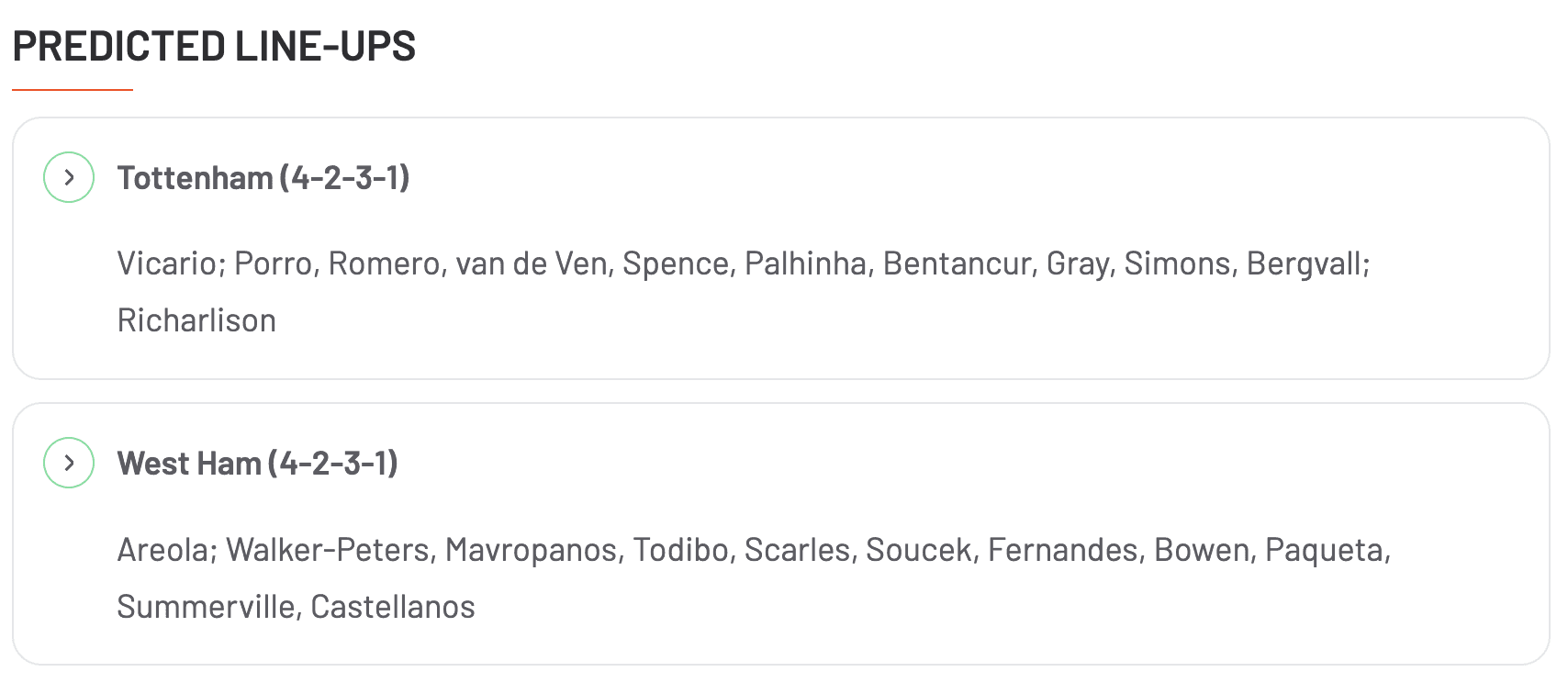
How Matched Betting Works
Despite Tottenham being the favourites at home, our tipster found a much better way to deploy the £10 free bet I grabbed from Betway. Instead of backing the Spurs to win, I went with over 13.5 corners at 11/5. The potential profit was £10 × (3.20 − 1) = £22.
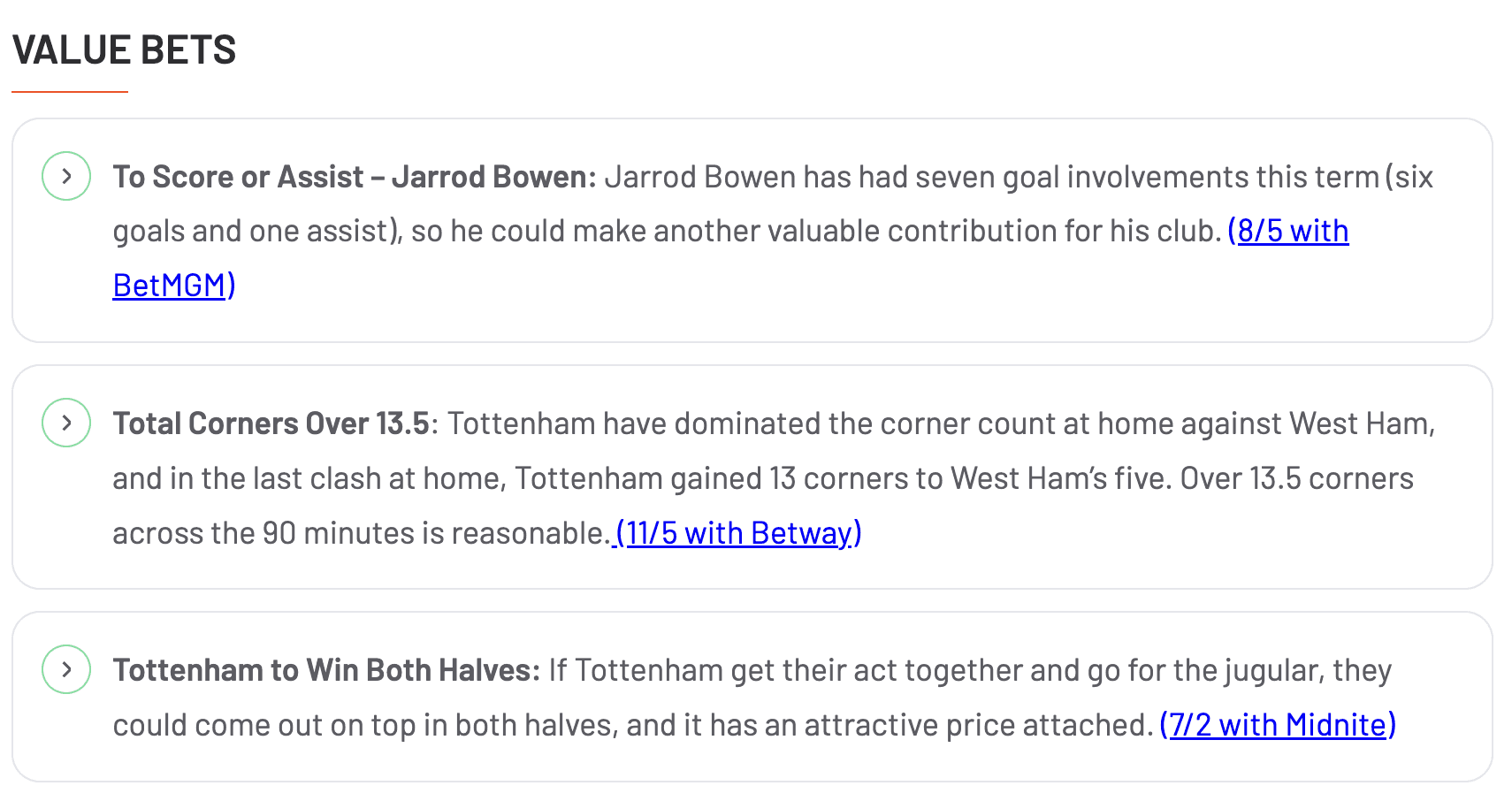
Despite Tottenham being the favourites at home
To cover all outcomes, I laid under 13.5 corners on a betting exchange at 1.4 for £15.71. To determine my ideal lay stake, I divided the potential profit from my free bet by the lay odds. So in this case, £22 divided by 1.4, which equals £15.71.
A lay bet is a wager that there won’t be more than 13.5 corners in the match. The lay stake is the amount you win if there are less than 13.5 corners, and the liability is what you must pay if there are more.
The match finished with 16 total corners, which meant over 13.5 corners landed. As a result, the free bet paid out £22 in winnings from the bookmaker, while the exchange position settled with a £6.28 liability (£15.7 x (1.4 odds - 1)). After deducting the lay liability, my profit came to £15.72.
If the match had gone the other way and produced 13 corners or fewer, the free bet would have lost without costing anything, but the lay bet would have won £15.71, so either way I would’ve locked in a win.
Best Leagues for Matched Betting
Over the years, I’ve found certain leagues and sports consistently offer the best opportunities for matched betting. The English Premier League (EPL) is a favourite due to frequent promotions and high liquidity on exchanges. In the NBA and NHL, totals and over/under points markets are ideal because scoring is predictable and exchanges are active.
Premiership Rugby and the Six Nations feature solid handicap markets, while Big Bash cricket offers totals and match-winner opportunities, especially in high-scoring T20 games. UFC works well for match winner bets and over/under rounds.
Best Leagues for Matched Betting
| League | Popular Markets | Why it’s good for matched betting |
| EPL | 1X2, Over/Under goals | Frequent promos, high liquidity |
| NBA | Over/Under points | Predictable scoring, active exchange |
| NHL | Over/Under goals | Stable totals, good exchange liquidity |
| Premiership Rugby | Handicap, Match Winner | Close odds, easy to hedge |
| Big Bash Cricket | Totals, Match Winner | High-scoring T20, frequent promos |
| UFC | Moneyline, Over/Under rounds | Active betting, frequent fight odds |
| Six Nations Rugby | Handicap, Match Winner | Close contests, good exchange coverage |

Matched Betting vs Arbitraging — The Key Difference
Matched betting and arbitrage are similar in that both aim to lock in low-risk profits, but they work in very different ways.
Matched betting relies on free bet promotions from bookmakers. You don’t need perfect odds, the back and lay odds just need to be close enough to cover all outcomes. This makes it beginner-friendly and low-risk, and it works even with small stakes, because the profit comes from the free bet rather than the odds difference.
Arbitrage, on the other hand, exploits pricing differences between two or more bookmakers. You must find events where the odds differ enough that you can back one outcome at one bookie and the opposite at another.
This usually requires large stakes to make it worthwhile. Arbitrage is frowned upon by bookmakers and often leads to account restrictions or bans.
Pros & Cons of Matched Betting
Pros
Almost guaranteed profit
Legal and safe
Works on most sports
Low risk
Takes advantage of bookmaker offers
Cons
Only 70-80% of free bet value realised
Reduces potential winnings
Requires a betting exchange
Pay commission on exchange winnings
The 4 Drivers of Spread Value
I’ve come to the conclusion that there are four main drivers of value in matched betting that separate the good bets from the shockers! Read our analysis to see what really matters:
Size of the Free Bet
The bigger the free bet, the bigger your potential profit. For example, a £50 free bet on Liverpool at 2/1 could net around £33-£35 after hedging, compared with just £3-£4 from a £5 free bet. Even if the odds are the same, a larger stake magnifies returns and, from my experience, makes taking the time to calculate the lay worthwhile.
Two-Way Market
Markets with only two outcomes, like betting on Manchester United to win, are simpler because your lay automatically covers a loss or draw.
Closeness of Odds
The closer the bookmaker and exchange odds, the less money you lose when hedging. For instance, backing an NBA over 220.5 points at 1.9 and laying at 1.88 locks in more profit than laying at 1.7.
Liquidity
High liquidity on exchanges like Betfair or Smarkets ensures you can place your lay bet at the price you need without moving the market. I learned this the hard way during a Big Bash T20 match where I tried to lay a £20 free bet on totals with low liquidity and ended up missing £5 in profit because my stake couldn’t be matched instantly.
Common Matched Betting Mistakes
When I first tried matched betting, I made every rookie mistake in the book. The biggest one was getting the lay stake wrong. I remember backing Man Utd with a £20 free bet at 3/1 and laying it incorrectly. I laid too much and ended up barely breaking even when Arsenal won.
Another classic blunder is not checking the odds properly. Even small differences between the bookmaker and exchange can eat into your profit, so I learned to always double-check before clicking the Place Bet button.
I also forgot that the lay automatically covers draws, and sometimes I overcomplicated things trying to hedge the draw separately, a total waste of time.
How I Evaluate a Matched Bet
First, I check for active free bet promotions from bookmakers, say bet £10, get £20 free offer. Next, I compare the back odds at the bookmaker with the lay odds on an exchange. The closer they are, the less I lose when hedging, and the higher my profit.
I also focus on two-way markets like a team to win because they simplify calculations. Then I evaluate each bet by calculating the ideal lay stake and the expected profit. For example, a £20 free bet on Liverpool at 3.0 with a lay at 2.95 might give £19 if Liverpool loses/draws and £18 if they win. I also check liquidity on the exchange and any commission, since these can reduce profit.
Best Matched Betting Markets
Matched betting is adaptable to many sports and markets. In football, the most popular is the 1X2 market because you can back a team to win and lay it on an exchange. The draw is also automatically covered. You can also use over/under goals, like betting over 2.5 goals.
In rugby, handicap markets are common. You can back a team to cover a handicap and lay it against them, which locks in a profit whether the game is close or one-sided. In basketball, over/under points total points markets in the NBA are great because it’s a two-way market, which is often 50/50.
In terms of football odds and bonuses, just remember a good market for matched betting has close back and lay odds and enough liquidity on the exchange to place the lay bet.
When I Avoid Matched Betting Completely
I’ve been matched betting for years, turning free bets into consistent and low-risk profits. Over time, I’ve learned there are times when it’s just not worth placing a bet! Follow these expert match prediction tips to avoid costly errors:
When the odds are too far apart between the bookmaker and exchange, making the math messy or profit minimal
If the exchange has low liquidity, I can’t place my lay bet without affecting the price
When there’s a high exchange commission, which eats into what would otherwise be a decent free bet profit
During volatile promotions, like flash odds that change rapidly, because I risk miscalculating the lay
When I don’t fully understand a market, such as obscure sports or exotic bets
Conclusion
Matched betting is my go-to method to turn free bets into cash with very little risk. Remember to always check the odds, focus on two-way markets, and keep an eye on exchange commissions. And if you want to get started or find the best offers, check out our guide for the latest free bet promotions.
FAQs
What is matched betting?
Matched betting is a strategy that turns bookmaker free bet promotions into nearly risk-free profit. You back a selection with a free bet and lay the same selection on a betting exchange. This covers all outcomes and allows you to book a profit, regardless of whether your team wins or loses.
Do I need a betting exchange for matched betting?
Yes. A betting exchange allows you to lay bets. This is necessary for hedging your free bet and covering all outcomes.
Can I make money with small free bets?
Even small free bets can be profitable, though your absolute profit is smaller. You can expect to extract up to 80% of the free bet’s value irrespective of the match result.
Which sports or leagues work best for matched betting?
Popular markets for matched betting include the EPL, NBA, NHL, Premiership Rugby, Big Bash cricket, UFC, and Six Nations rugby. These leagues have active promotions, high exchange liquidity, and markets like 1X2, over/under totals, and handicaps that simplify hedging.
Is matched betting legal and safe?
Matched betting is a mathematical strategy using free bets and exchanges. It’s fully legal and considered low-risk, though you must manage stakes carefully and follow bookmaker terms to avoid errors or account restrictions.

Bruce Douglas is an experienced editor and copywriting professional with a proven track record in shaping high-quality content across multiple platforms. With a career spanning journalism, editorial management, and digital content strategy, he brings a keen eye for detail and a passion for precision to every project he works on.
Comments
0 comments
No comments yet. Be the first to share your thoughts!
Related Resources to Betting Academy
- How Goliath Bets Work in Sports Betting
- Combination Bets Explained
- Cash Out or Let It Ride? How to Make the Right Call on Your Acca
- How Futures Betting Works 2026 Explained with Value Odds and Risk Factors
- Double Betting Explained: The Expert Strategy Playbook 2026
- Card Betting Explained: Strategy, Odds & How to Find Value
- Treble Betting Explained: How it Works
- Single Betting Explained: Odds, Probability & Value Guide
- System Betting Explained
- European Handicap Betting Explained
- Spread Betting Explained: Expert Playbook & Strategy Guide 2026