
15 Best UK Betting Sites – Licensed Online Bookies for 2026
How First Half Goals Betting Works (Expert Guide for 2026)
I’ve always liked first-half goals markets because they’re faster to settle and often mispriced when teams start aggressively. However, only goals in the first 45 minutes count. I remember backing over 2.5 first-half goals in Manchester Utd’s clash against Tottenham, but the 3rd goal didn’t arrive until the 81st minute! In this guide, I’ll share a practical framework I use to turn stats into predictive weapons so you can spot first-half value efficiently. Get ready to read our betting analysis and understand when the next goal is imminent!

SportsBoom offers honest and impartial UK bookmaker reviews to help you make informed choices. While we may earn commissions through affiliate links, our content remains independent and free from promotional influence. For more information, see our Content Transparency and How We Review pages.
First Half Goals Betting
What Is First Half Goals Betting?
What Is First Half Goals Betting
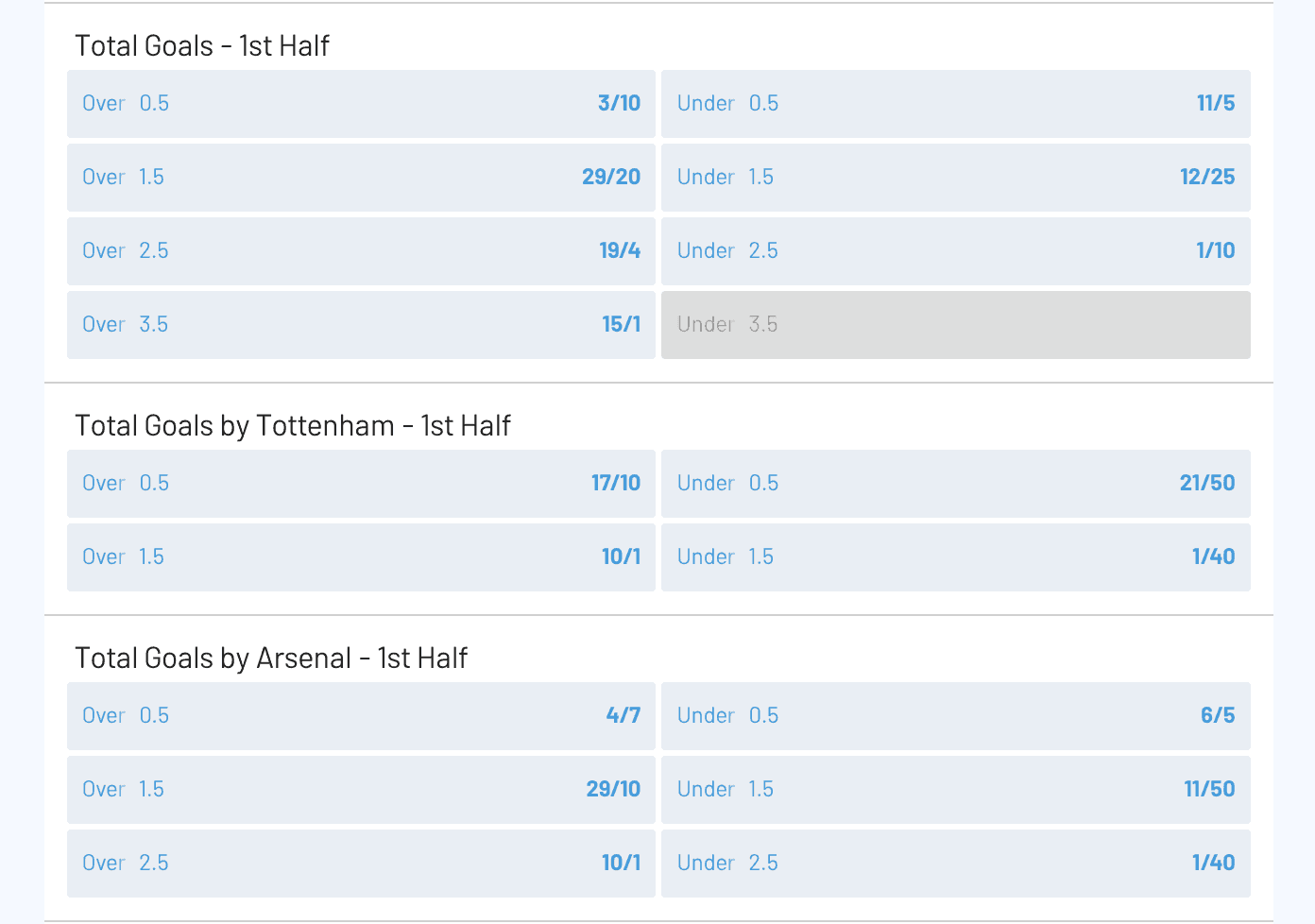
First Half Goals betting focuses on how many goals are scored in the opening 45 minutes of a match, rather than the full game. You can bet on totals like over/under a set number of goals or whether both teams will score.
For example, in a recent Wigan vs Luton match, I backed over 1.5 goals in the first half at 9/4. This meant I was predicting that at least two goals would be scored before half-time.
DID YOU KNOW? In the 2025/2026 season, 46% of Manchester City’s matches have seen 1.5 or more goals scored in the first half, including both teams. (Source: FootyStats.org)
How First Half Goals Betting Works
How First Half Goals Betting Works
Now that you know what first-half goals betting is, let’s look at how the market works in the real world:
- 1
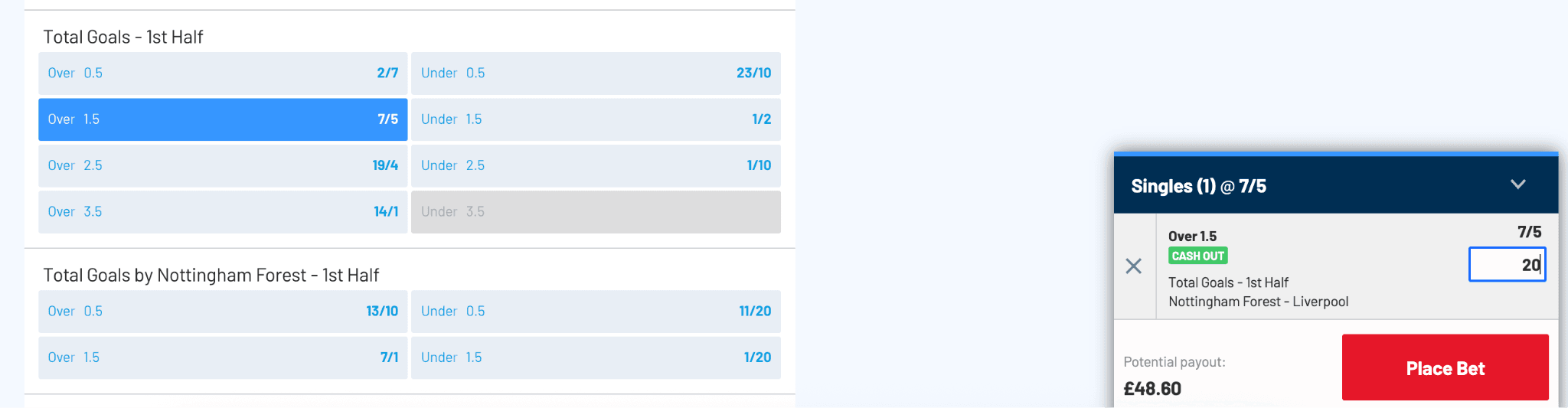
Scan fixtures for teams likely to produce first-half goals. I chose Nottingham Forest vs Liverpool because Liverpool’s aggressive pressing and Forest’s woeful defence suggested multiple first-half chances.
- 2
Check early metrics, including both sides’ first-half xG, shot volume, and attacking tempo.
- 3
Select the line, say Over 1.5 First-Half Goals at 7/5.
- 4
Enter your stake, for example, £20.
- 5
Confirm and place the bet before kickoff
- 6
If two or more goals occur before halftime, the bet wins.
- 7
Review the performance and note key patterns for future first-half bets.
Best Leagues for First Half Goals Betting
First-half goals vary significantly across leagues due to tactical styles, tempo, and defensive patterns. The Premier League and Bundesliga are typically high-tempo and open, producing more early chances and making first-half overs more frequent and reliable.
From what I’ve seen, Serie A and La Liga tend to start slower, with teams prioritising defensive structure early, so first-half goals are less predictable and require stronger signals from xG and attacking metrics. MLS often features open play and variable defensive quality, leading to frequent first-half scoring opportunities.
League | Avg First‑Half Goals per Match | Why First‑Half Bets Are Reliable There |
Premier League | 0.90-1 | Balanced scoring early and late, strong tempo teams create chances before the break, with ~50% of matches seeing goals. |
Bundesliga | 1.10-1.20 | Aggressive pressing and open play increase early scoring, often underpriced by markets. |
Serie A | 0.80‑0.90 | More tactical, defensive starts; first-half goals are less frequent, so overs require clear attacking signals. |
La Liga | 0.80 | Many teams score later; first-half goals bets need strong individual team metrics. |
MLS | 0.85‑0.90 | Open tactics and variable defence produce frequent first-half goals. |
Factors That Create Value in First-Half Markets
After spending the last 5 seasons religiously following EPL first-half markets, I’ve established that these are stats that actually have predictive power:
- Early Expected Goals (xG): Teams consistently generating first-half xG above league average are far more likely to hit early goals.
- Shot Volume & Quality: Number of shots in the box and on target in the opening 30 minutes directly correlates with early scoring probability.
- Pressing & Tempo: High-intensity pressing teams or sides starting with fast possession transitions often create openings before the half.
- Historical First-Half Trends: Look at the last 5-10 matches for early scoring patterns, as some teams habitually start slow, others explosively.
- Defensive Weakness: Opponents’ poor first-half defensive xG or clearance efficiency flags a higher risk of early goals.
Winning vs Covering — First-Half Mindset
Betting on first-half goals requires a mindset distinct from full-time markets. You’re analysing both teams’ probabilities of scoring and conceding early and how these interact.
For example, if a team scores in the first 15 minutes, will they sit back and defend or press for a second? Will the opponent become reckless chasing an equaliser, opening gaps at the back?
Pros & Cons of First-Half Goals Betting
Pros
Settles quickly
Easier to predict than full-time totals in some games
Can exploit fast-starting teams or defensive slow starters
Works well for in-play hedging and live betting
Cons
Late goals don’t matter
Risky if teams start slowly
Fewer stats available than full-time markets
Can be volatile in unpredictable matches
The 4 Drivers of First-Half Goals Value
Over years of tracking early-game trends, I’ve found four key drivers that consistently signal value:
First-Half Expected Goals (xG) Across Both Teams
High early xG for both sides indicates scoring potential before halftime. Based on my experience, teams that regularly generate quality chances early tend to convert sooner rather than later.
Early Shot Volume & Location
It’s not just the number of shots, but where and how they’re taken. Shots on target inside the danger area in the opening 15-30 minutes strongly correlate with first-half goals.
Pressing & Tempo Indicators
Teams that press high and attack quickly from kickoff force turnovers and transitions, creating early openings. Metrics like passes per defensive action (PPDA) and final-third possession help measure this.
Defensive Suppression’s Inverse Effect
Value emerges when both teams are capable of creating early chances and neither consistently suppresses first-half threats. If one side restricts chances heavily, early totals often fail to hit.
Settlement Rules
Settlement Rules
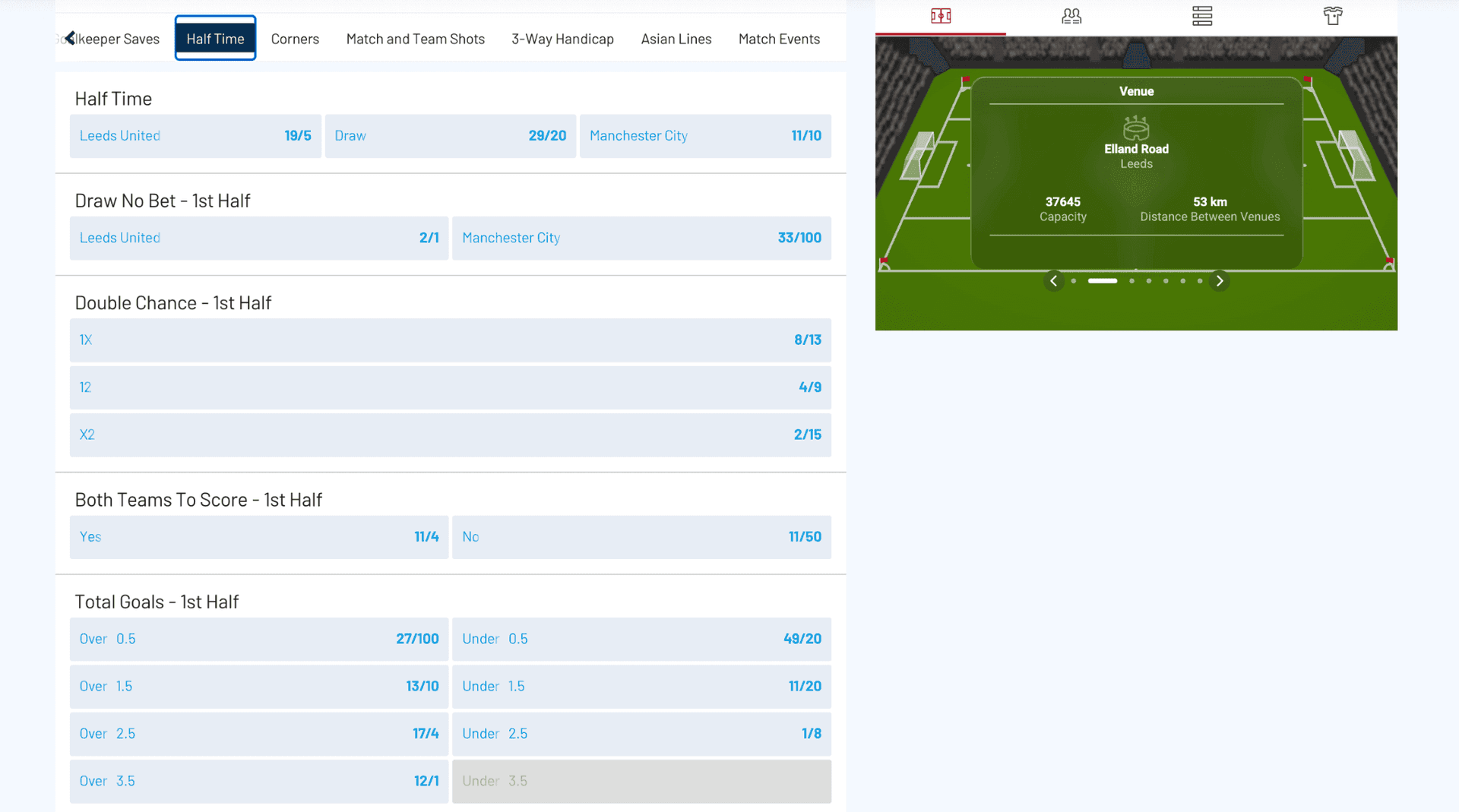
To ensure you don’t mistake a winning bet, brush up on these settlement rules:
- Only goals scored from kickoff to 45+ minutes count.
- Goals scored in extra time after 45 minutes (second half) are ignored.
- If the first half ends exactly on the line (e.g., over/under 1.5 goals), the bet is settled as a loss or win depending on your selection.
- Both teams’ goals count toward totals; it’s not limited to one side.
- Red cards or other incidents do not affect the settlement, only the actual goals scored.
- If the match is abandoned before halftime, bets are usually voided unless otherwise specified.
Common First-Half Betting Mistakes
Sometimes I have a tendency to overestimate shot trends from both sides. I remember when Newcastle United played Crystal Palace on 4 January earlier this season; the match finished 2‑0, but was 0‑0 at halftime and featured few meaningful first‑half chances. Despite Newcastle clearly having a stronger attack overall, neither side generated the kind of early shot volume or xG that justified backing over first‑half goals.
Another error I made was not paying enough attention to defensive shape. A side might have good early xG, but if their opponent consistently suppresses first‑half shots and shows tactical caution early on, the market usually prices that correctly.
How I Evaluate a First-Half Goals Bet
I start with pre‑match metrics like first‑half xG for both teams, early shot volume & quality, tactical tempo (pressing/pace), and historical first‑half patterns. Check out my decision table to see how it works in practice:
| Criteria | Yes/No | Action |
| Both teams' first‑half xG > league avg | Yes/No | Reject if No |
| Combined early shots on target >= 3 | Yes/No | Reject if No |
| Both teams press high or attack early | Yes/No | Reject if No |
| No slow‑start historical pattern | Yes/No | Reject if No |
| Line offers value vs my model | Yes/No | Bet if Yes |

In Manchester City vs Leeds United (29 November 2025), City scored early (Foden 1’) and added another before halftime, putting them 2‑0 up by the break. The early xG and shot creation data for City were significantly higher than Leeds’s defensive allowance, and both teams generated high‑quality chances in the opening 30 minutes. The market hadn’t fully adjusted for City’s first‑half dominance, so backing over first‑half goals made sense.
First-Half Goals
I look for these types of games when scanning for first-half goals value:
High-Octane Openers (Early Press + Attack Teams)
- When I bet: I target overs when both sides press aggressively, maintain a high tempo, and generate multiple first-half shots in the danger area. Early corners and midfield runners arriving in the box are key.
- When I avoid: Matches with slow starters, midweek fatigue, or one side naturally dropping deep from kickoff.
- Why the price is wrong: Markets often price total goals based on full-time expectations and ignore explosive starts.
Reactive Counter Battles (Structured Underdogs)
- When I bet: I back overs if the underdog concedes early possession but leaves space and allows high-quality transitions. Early defensive lapses or misplaced passes are triggers.
- When I avoid: Underdogs that defend in a highly disciplined low block and limit transitions.
- Why the price is wrong: Odds often assume a cagey first half, underestimating the probability of early openings.
Emotionally Charged Matches (Motivation Spikes)
- When I bet: Derbies, relegation six-pointers, or first games under new managers often produce frantic opening 20-30 minutes, making +1 or 1.5 first-half overs appealing.
- When I avoid: Mid-table dead rubbers, or teams recovering from heavy fixture congestion with low intensity.
- Why the price is wrong: Markets flatten motivation into averages, leaving early-goal potential undervalued.
First-Half Goals vs Other Markets

First-Half Goals vs Other Markets
When I’m choosing between first-half goals, full-time totals, or BTTS, the key is reading tempo, xG, and team patterns. From what I’ve encountered, first-half over/under is ideal for games where both sides start aggressively or historically open early. For example, in Man Utd vs Fulham (1 February 2026, over 1.5 first-half goals), both teams had high first-half xG and aggressive pressing. It paid off because early shot volume and finishing efficiency were strong.
Full-time over/under suits more predictable attacking teams or leagues with consistent scoring patterns. I backed Manchester City over 2.5 full-time vs Wolves (16 August 2025) because City’s possession dominance and finishing efficiency suggested a high overall total, even if early goals weren’t guaranteed. This market smooths early randomness, but the downside is longer waits and potential late-game swings.
BTTS works when both sides attack and defend poorly or have asymmetric strengths. I targeted Brighton vs Newcastle (18 October 2025) because xG and shot creation from both sides suggested a likely mutual goal.
When I Avoid First-Half Goals Betting Completely
Knowing when not to pull the trigger is often the distance between decent and great punters. Don’t ignore these football betting insights for UK fans:
- Low Early Expected Goals (xG): Both teams record first‑half xG well below league averages in comparable fixtures.
- Weak Opening Shot Creation: First‑half shots on target or in the box are consistently low for both sides.
- Tactical First‑Half Inertia: Teams with slow tempo, deep defensive shape, or historically cagey starts rarely produce multiple goals early.
- Key Attacking Absences: If wingers/forwards who generate most early danger are out, early scoring probability drops sharply.
- No Clear Pressing Advantage: If neither side applies aggressive pressing early, buildup tends to be slow, hurting goal frequency before 45’.
When Everton played Brighton on 25 January 2025, the first-half xG for both sides combined was under 0.5, and only one shot on target was recorded before halftime. Brighton’s defensive structure and Everton’s low early shot creation signalled a low-scoring first half.
Over 1.5 first‑half goals wasn’t a value bet. Unsurprisingly, the half finished 0‑1, with the sole goal coming from a penalty.
First-Half Goals Betting Checklist
Before I place a first-half goals bet, I always ask myself these questions:
Do both teams have high first-half xG compared to league averages?
Are the teams creating multiple shots on target in the first 30 minutes?
Are key attacking players fit and confirmed in the starting lineup?
Do both teams play with a fast tempo or high pressing style early on?
Have the teams scored multiple goals in the first half in recent matches?
Does the head-to-head record suggest early scoring is likely?
Are the odds offering value compared to your analysis?
Is the match free from factors that could slow early scoring (midweek fatigue, heavy travel)?
Do both teams avoid historically cautious first-half tactics?
Conclusion
When it comes to first-half goals betting, I rely on a narrow set of drivers such as early xG trends, shot velocity inside 20 minutes, pressing height, and how both teams historically react after conceding. I filter matches through defined archetypes, then run a hard yes/no checklist before I even look at odds. The system is easy to implement, so give it a try and let me know how you get on, and don’t forget to take advantage of Premier League bet offers.
FAQs
What counts as a first-half goal?
A goal scored between kickoff and 45+ minutes counts, including stoppage time. For example, in Man City vs Fulham (Feb 2026), City’s first goal at 24’ was a first-half goal, which instantly affected my over 1.5 first-half position.
Are first-half bets safer than full-time goals?
First-half bets settle faster, which reduces late-game variance, but early red cards or defensive tactics can ruin them. I avoid overs when only one side is attacking early, like in Newcastle vs Crystal Palace (Jan 2026).
How does line movement affect odds?
If a first-half total over odds drifts from 1.5 to 1.25, it usually signals sharp money is predicting early goals and early attacking patterns. I often adjust my stake when early xG data supports the move.
Which leagues are best for first-half goals?
Leagues with open play and pressing styles, like the EPL or Bundesliga, produce consistent early chances, while you need to be wary of low-scoring leagues like Serie A.
Can other sports use first-half logic?
Yes. In basketball or the NHL, early quarters matter like first halves in soccer. For example, betting over 50 points in the first half of an NBA game works if pace and early shooting percentages align.

Bruce Douglas is an experienced editor and copywriting professional with a proven track record in shaping high-quality content across multiple platforms. With a career spanning journalism, editorial management, and digital content strategy, he brings a keen eye for detail and a passion for precision to every project he works on.