
Snooker Interviews
Ding Junhui Gives Honest Insight into the Rise of Chinese Snooker — And where the UK Must Improve
Ding Junhui gives a candid assessment of snooker’s shifting landscape, revealing how Chinese 8-ball briefly stalled growth in China before Zhao Xintong’s world title reignited participation. With young Chinese talent booming, Ding warns the UK is falling behind at grassroots level, insisting investment in academies and amateur tournaments is urgently needed.

SportsBoom offers honest and impartial UK bookmaker reviews to help you make informed choices. While we may earn commissions through affiliate links, our content remains independent and free from promotional influence. For more information, see our Content Transparency and How We Review pages.
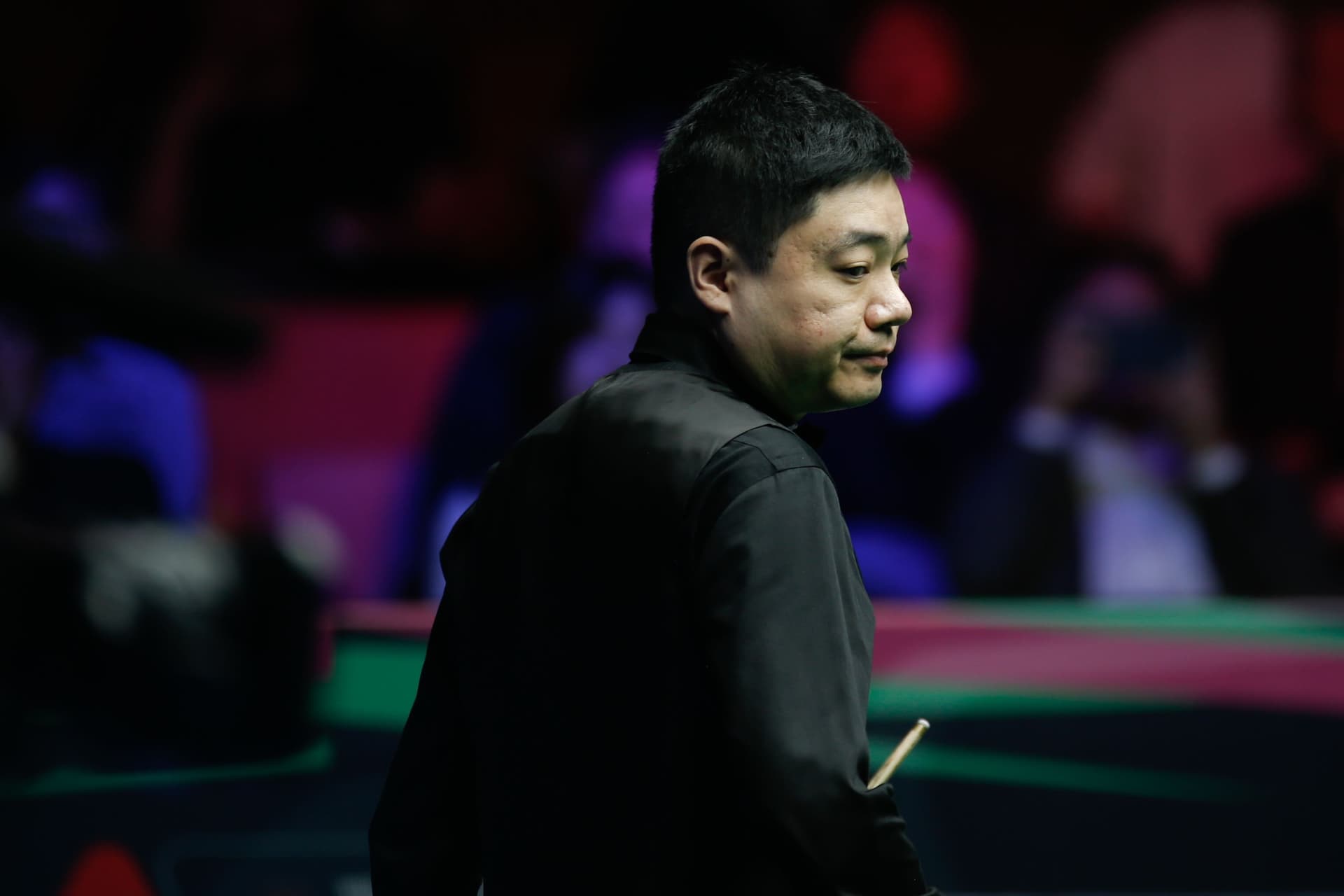
Credit: Getty Images
For years, snooker fans in the UK have been told about the unstoppable rise of the sport in China, an ever-growing wave of talent supposedly ready to overtake the traditional powerbases of Sheffield, Glasgow, and beyond.
The narrative has often been one-sided: China booming, Britain fading.
But Ding Junhui, the nation’s greatest snooker icon, offered a far more nuanced and honest picture of the reality on the ground.
According to Ding, the last few years haven’t been as straightforward as the West may believe.
Snooker did not simply continue to rise unchecked.
Instead, a rival cue sport, Chinese 8-ball, also known as heyball, surged in popularity, pulling young talent away from the green baize at exactly the time snooker was expected to hit its peak.
Snooker’s Unexpected Competitor
Ding revealed that over the last two to three years prior of Zhao Xintong’s recent world championship crowning, many emerging players in China have actively chosen to pursue heyball instead of snooker.
Drawn by bigger domestic circuits, more frequent events, and greater financial opportunity without the need to travel abroad, talented prospects drifted away.
“In the past two, three years I think snooker in China it didn’t look like it was going quite well,” he told SportsBoom.co.uk.
The volume of heyball tournaments became so substantial that even established names switched paths. Ding referenced Cao Yupeng specifically, a reminder that this wasn’t limited to juniors or amateurs.
“Chinese heyball if you know that, they have a lot of tournaments in China so players like Cao Yupeng have gone back to being pool players, so they have more choice to change their career. This time it wasn’t good.”
It was a concerning period for Chinese snooker. The talent existed, but it was being used elsewhere.
Xintong’s World Title: The Spark That Changed Everything
However, fortunes turned sharply, and it took a world champion to do it.
Xintong’s World Snooker Championship victory acted as a catalyst.
The public fell in love with snooker again, participation began to rise, and tables once again filled with young players hoping to follow in his footsteps.
Ding confirmed that he has witnessed the shift firsthand. To clarify the change, we asked if more players were returning to snooker and shelving their pool cues.
“Yes, it looks like this,” Ding answered.
“After Xintong won the world championship, snooker has become back on the line now.”
His victory wasn't an isolated boost; it was a cultural jolt.
A New Generation Winning
It’s not just Xintong waving the flag. A surge of Chinese winners across ranking events has helped re-ignite passion for the sport at home.
Lei Peifan’s Scottish Open triumph, Xiao Guodong defending the Wuhan Open title, and most recently the International Championship victory by 20-year-old Wu Yize have all fed into a renewed national pride.
“I’m looking forward to more players like Wu [Yize], he won the International Championship. I love seeing more Chinese players win any tournaments, then we can keep snooker hitting in China.”
Ding’s excitement for the next generation is clear. In his view, Chinese snooker has entered a new era, one filled with talent, depth, and an increasingly competitive conveyor belt of teenage players ready to turn professional.
UK Talent Pools Run Thin
However, while China flourishes, Ding believes Europe is heading in the opposite direction.
The contrast, in his assessment, is stark. Where China has hundreds of juniors ready to push through, the UK, once the world’s strongest talent factory, is producing only a handful.
“I don’t see much players from Europe or the UK. They have a few but not like in China, they can pick hundred young ones.”
“They are up with the levels and they’re like 12 or 13 years old. In the UK they are fewer, you see [Stan] Moody, or someone from Belgium [Ben Mertens].”
Ding is not dismissing European potential, he’s warning that without change, future world titles will increasingly move east.
He wants more academies, more grassroots development, and more amateur events to give young British players the same pathway Chinese juniors now enjoy.
“I see a few new faces in young players, but it is only like two or three so it’s not good enough.”
“I think they need to improve more for young academies and give them more amateur tournaments.”
The sport is evolving. China’s resurgence, fuelled by champion success and mass participation, may soon reshape snooker’s competitive landscape.
Ding has seen the highs, the dips, and now the rebirth, and his message is simple: the West must act or be overtaken.
China isn’t just producing stars. It’s producing depth.
The question now is whether the UK can respond, or whether snooker’s future will belong to Beijing, Shanghai and beyond.

Louis Hobbs is the Sports Editor at SportsBoom, overseeing daily coverage across a wide range of sports while shaping the site’s editorial direction and breaking news agenda.
When he’s not editing the website from home or SportsBoom’s London office, Louis can usually be found in the darts or snooker press room. He has covered both sports extensively for SportsBoom, reporting live from venues for over three years and building strong relationships across the professional circuits.
With a background in interviews, exclusives and live event reporting, Louis combines on-the-ground insight with sharp editorial judgement to ensure SportsBoom delivers authoritative, engaging and timely sports journalism.
Comments
0 comments
No comments yet. Be the first to share your thoughts!
Related Resources to Snooker Interviews
- Exclusive: Neil Robertson Eyes ‘Perfect Aussie Winter’ as Travis Head’s Ashes Heroics Spur UK Championship Charge
- Mark Allen to Play 24-Hour Charity Snooker Marathon Ahead of UK Championship
- Exclusive: Mark Selby Sees Missing $1 Million Saudi Event as Blessing Ahead of UK Championship Bid
- Exclusive: Judd Trump’s Dubai Move Backfires as Brother’s Visa Woes Hit Practice Routine
- Exclusive: Jimmy White Has Backed Pal Ronnie O'Sullivan to Win a Record Eighth Crucible Crown
- Jack Lisowski Shakes Off Nearly Man Tag After Dramatic Northern Ireland Open Triumph
- Exclusive: Kyren Wilson Joins New Players’ Association to Shape Snooker’s Future for His Kids
- Exclusive: Ronnie O’Sullivan Quits Lucrative Exhibitions to Give His All to Snooker Once More
- Exclusive: Ronnie O’Sullivan Plots Pathway to Find the Next British Snooker Icon
- Exclusive: Snooker Legend Ken Doherty Backs New Cue to Extend Career as He Eyes 35th Pro Season
- Mark Williams Recalls First Encounter with Zhao Xintong Ahead of Crucible Final
- Ronnie O’Sullivan Fears He May Never Fix His Game After Semi-Final Defeat to Zhao Xintong
- Snooker Must Match Darts Money: Barry Hearn Gives Sheffield and the Crucible Three-Month Ultimatum
- World Snooker Championship 2025: Judd Trump Wary of Burnout Ahead of 2022 Semi-Final Rematch with Mark Williams
- Chris Wakelin Backs Controversial Zhao Xintong to Go All the Way at the Crucible
- Mark Williams Admits He Never Liked Being Part of the Class of ‘92
- Jet-Setting Luca Brecel and Judd Trump Gear Up for Explosive Quarter-Final
- Ronnie O’Sullivan Shrugs Off Claims of ‘Easier’ Run to Final
- World Snooker Championship 2025: Shaun Murphy Backs Trump as ‘Champion Elect’ After Crucible Loss
- John Higgins Pays Tribute to Long-Lasting Rivalry with Mark Williams